
The gear reaches the scale
Proper descalers, matched to each surface, are what move mineral off glass and out of grout.
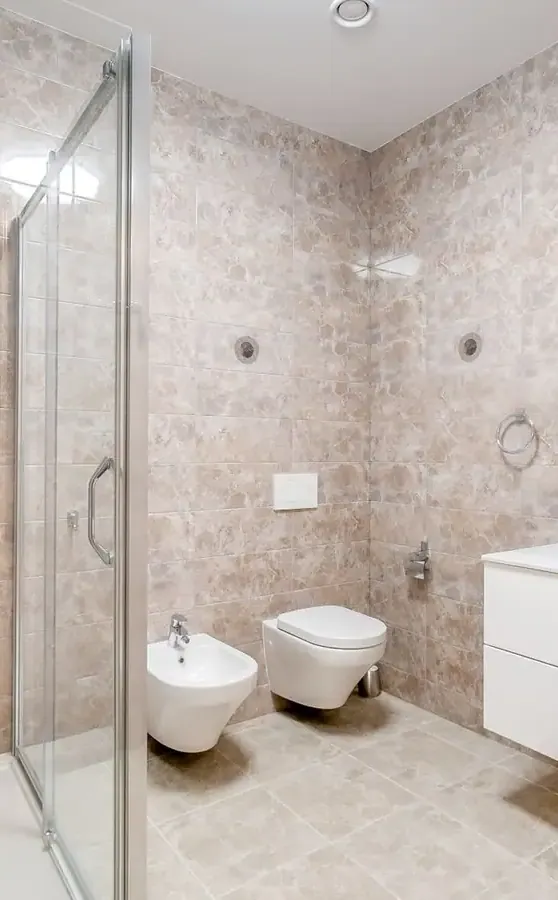
Al Zumurrud is a waterfront district on the Red Sea, where high humidity and constant salt air deposit salt film on glass and taps every single day. The bathroom here needs a different approach because the problem is not only limescale, but salt that returns quickly and sits on every reflective surface.
Glass and mirrors in bathrooms here show a thin salt film within days of cleaning, even when the air is still and the window stays closed most of the time. For the method itself, see how we approach bathroom cleaning.
Salt arrives every day with the sea breeze and settles on glass and metal surfaces faster than limescale builds up. Deep cleaning removes the layer completely, but the continuous deposit returns within a few days because the source is constant.
The damp coastal air penetrates the joints between tiles and feeds mould from inside. Surface wiping cannot reach this. Grout needs individual treatment because coastal humidity will return and feed the mould again.
Bathroom textiles absorb both salt and moisture, leaving white residue and stiffening the weave. Cleaning includes advice on ventilation and rapid drying because the problem extends to materials, not only surfaces.
The direct coastal exposure means year-round humidity and salt spray, which accelerates salt deposit on every surface, especially glass and metal fittings that are exposed to sea-facing windows.
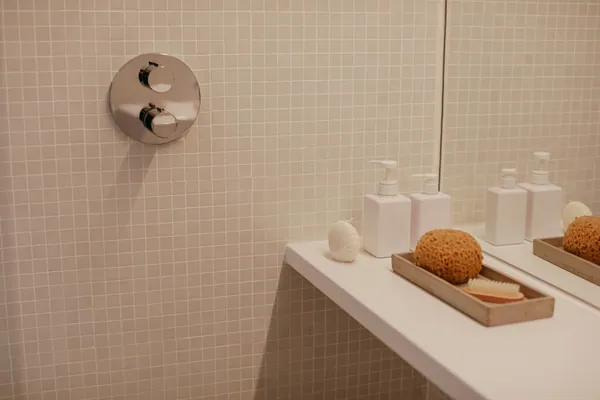
Coastal surfaces with both salt and limescale need careful testing first because some chemicals react with salt deposits and can leave residue or discoloration.
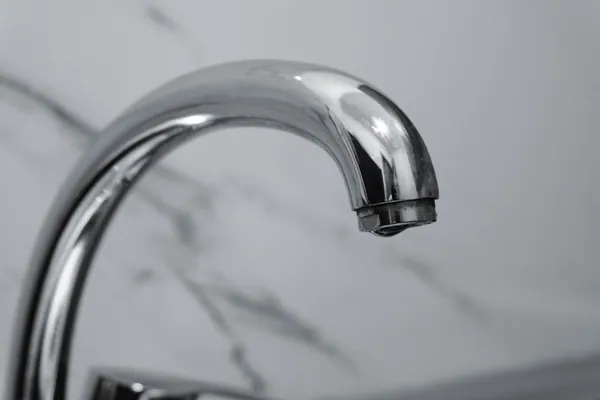
Remove salt before tackling limescale because salt coating prevents descaler from penetrating the underlying scale effectively.
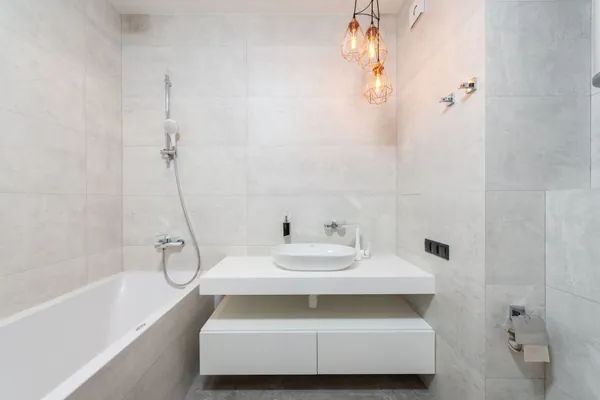
Grout lines here need thorough treatment because year-round humidity constantly feeds the mould underneath, not just on the surface.
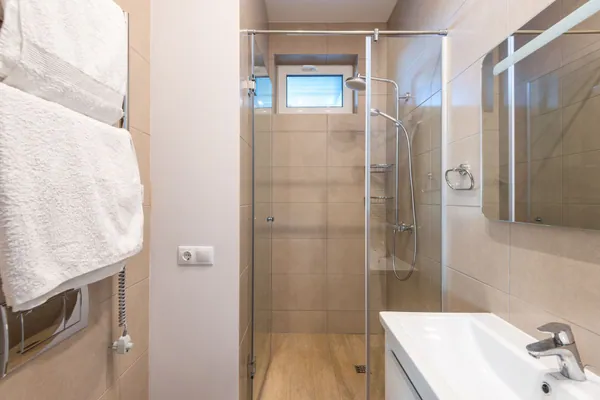
Glass and mirrors in coastal bathrooms need very rapid drying after cleaning because salt-laden air will re-deposit within hours if left damp.
Toilet, basin and bath accumulate both salt and limescale, each requiring its own timing and approach to clear completely without residue.
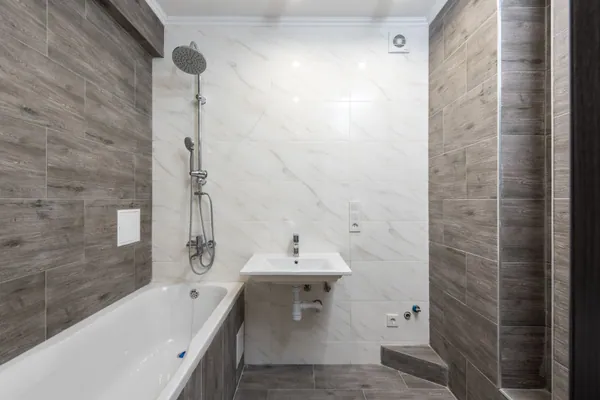
Floor drains and ventilation are critical in salt air because the humid environment keeps drain lines wet and encourages bacterial growth that causes lingering odour.
We open the room, take everything off the ledges and shelves, and lift loose hair from the drains before any water or chemical goes down.
Scale on glass, taps and the shower head is not scrubbed off cold.
The joints are treated and scrubbed along the line, top to bottom, because film sits in the porous grout and a flat wipe never enters it.
The bowl, the base joint and the floor trap are done as one stage, since this is where odour lives.
What the products loosened is lifted off, and everything is rinsed downward so nothing dirty settles back onto a cleaned surface.
The damp low corners are dried so nothing feeds mould again, then we walk the room with you.
Al Zumurrud sits about 2 km from Al Gharbiyah and about 2.5 km from Al Corniche.
Open in Google MapsProper descalers, matched to each surface, are what move mineral off glass and out of grout.
We send a team, not a single person.
Where scale has already etched the glass or mould has stained the grout for good, we tell you at the inspection.
Nothing is called done until you have walked the room and said so.
Photographs from real jobs carried out by the crew.












The commitment is simple enough to actually keep: we do not leave until you have seen the result and told us what you think of it.
The district runs from Omar bin Siddiq Attar Mosque on the eastern edge toward the sea, with Al Khair Mosque marking the midpoint. We reach homes via the main seafront road and the primary residential entry from the main avenue.
We provide these in Al Zumurrud too, and more than one can share a single visit.



