
The gear reaches the scale
Proper descalers, matched to each surface, are what move mineral off glass and out of grout.
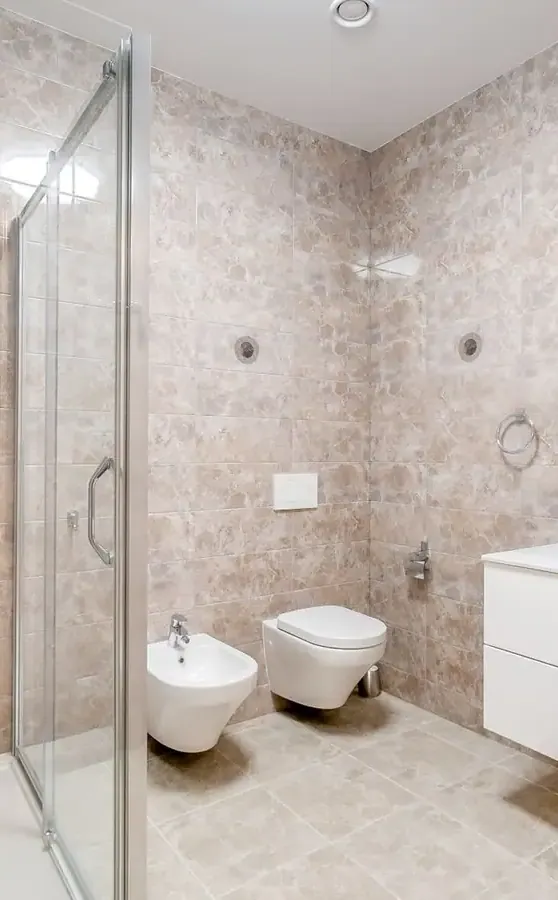
Al Safwah is a small quarter in Taibah sub municipality east Jeddah with simple residential character and more traditional building than newer areas. Bathrooms here have older designs and basic plumbing. The main challenge is not the design but very hard water and persistent moisture. Scale deposits faster because the pipes themselves may carry years of mineral buildup. Deep cleaning demands patience and specialized products formulated for heavy mineral load.
Bathrooms in Al Safwah require longer dwell times for limescale removal because deposits have accumulated for years, and a single product application often needs to be repeated. For the method itself, see what bathroom cleaning involves.
Very hard water in this area leaves thick millimetre-scale deposits on copper piping and tap aerators. These layers have built up over years. Removal requires heavy-duty acid products, brass brush work, and extended dwell time because thick deposits need time to soften before mechanical removal can work.
Old bathroom grout traps both mould and limescale together. The joint looks black or perpetually dirty even after regular cleaning. Removal needs a stiff grout brush, products that dissolve mineral deposits and kill organisms simultaneously, and repeated application because both problems run deep.
Limescale buildup inside supply pipes can reduce tap pressure noticeably. During cleaning, aerator heads need removal and internal flushing to clear deposits. This may require taking apart fittings temporarily to reach mineral buildup that blocks water flow.
A modest residential quarter on the eastern boundary of Jeddah with simple traditional bathrooms. Proper cleaning must remove years of accumulated mineral deposits from very hard local water.
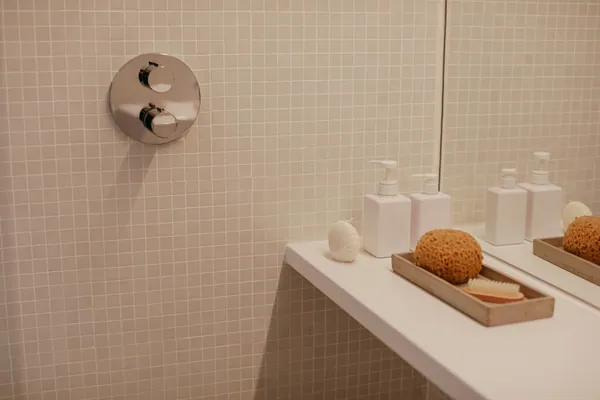
Check begins by assessing tap water pressure and visible scale on aerators, noting the degree of pressure loss caused by deposits before cleaning starts.
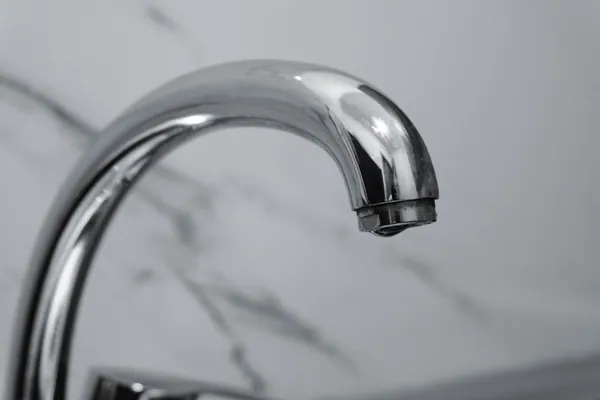
Limescale removal starts with product application and extended dwell time, then tap heads are unscrewed and cleaned inside with brass brush to remove deposits from internal passages and aerators.
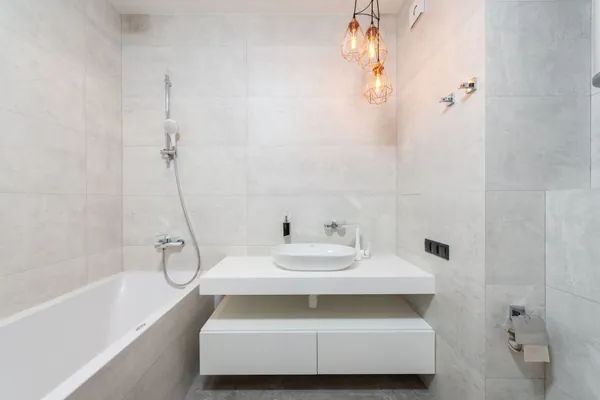
Grout lines need product that dissolves both limescale and mould simultaneously, stiff brush work, and extended time before rinsing. A second application may be needed hours later.
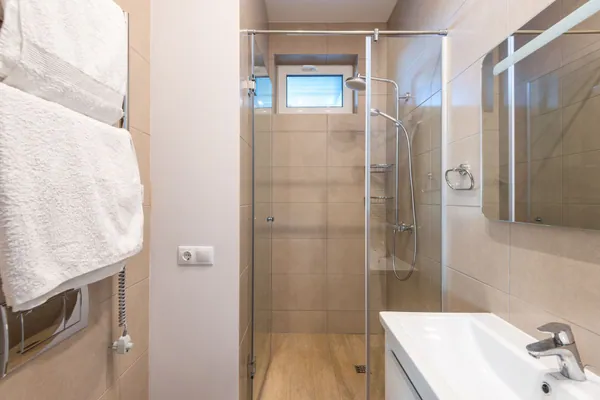
Glass and mirrors after scale removal may need multiple wipes because product residue leaves spots even after rinsing, requiring final rinse with distilled water to clear all film.
Toilet, basin and bath are scrubbed with firm brush and products safe for ceramics, with extra attention to crevices where mould and scale settle deep.
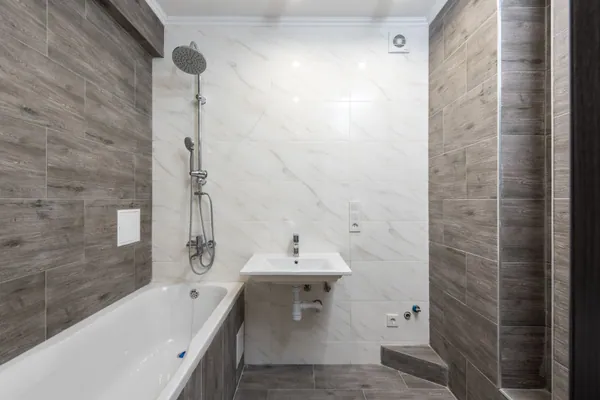
Drains and supply connections are checked for blockage from scale, which may require disconnecting and flushing internally with high-pressure water to clear mineral buildup completely.
We open the room, take everything off the ledges and shelves, and lift loose hair from the drains before any water or chemical goes down.
Scale on glass, taps and the shower head is not scrubbed off cold.
The joints are treated and scrubbed along the line, top to bottom, because film sits in the porous grout and a flat wipe never enters it.
The bowl, the base joint and the floor trap are done as one stage, since this is where odour lives.
What the products loosened is lifted off, and everything is rinsed downward so nothing dirty settles back onto a cleaned surface.
The damp low corners are dried so nothing feeds mould again, then we walk the room with you.
Proper descalers, matched to each surface, are what move mineral off glass and out of grout.
We send a team, not a single person.
Where scale has already etched the glass or mould has stained the grout for good, we tell you at the inspection.
Nothing is called done until you have walked the room and said so.
Photographs from real jobs carried out by the crew.












The commitment is simple enough to actually keep: we do not leave until you have seen the result and told us what you think of it.
East Jeddah lies furthest from the sea and closest to the open ground and hills beyond the ring roads, so the air is drier and the dust is coarser and paler than on the coast. It comes in under doors and settles on every flat surface overnight, making sofas, mattresses and curtains the heaviest part of the routine. Floors are mostly ceramic tile in the apartment districts and marble in the villa areas, both scratched by grit that is mopped rather than swept. Roof tank water leaves a grey film of sediment in baths and basins.
We provide these in Al Safwah too, and more than one can share a single visit.



