
The gear reaches the scale
Proper descalers, matched to each surface, are what move mineral off glass and out of grout.
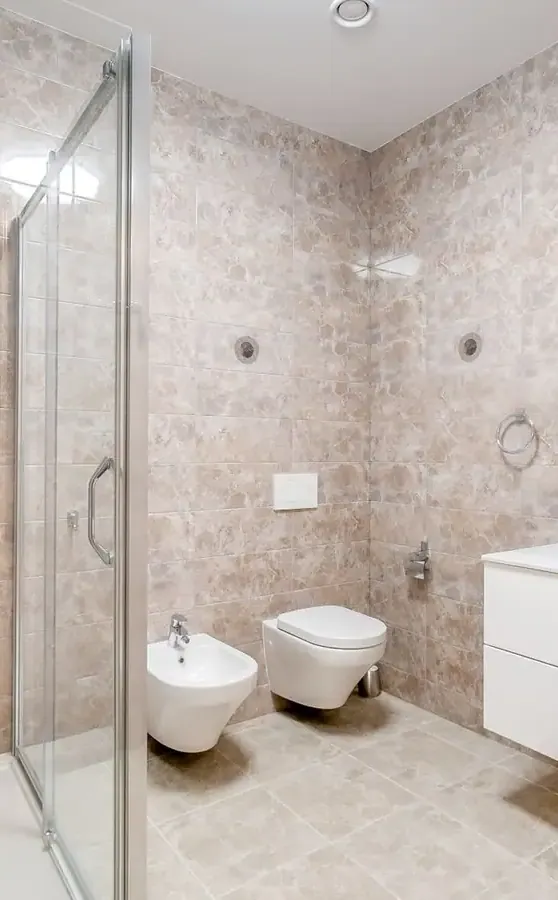
Al Karamah is a newer administratively defined residential district of south Jeddah near Al Lith Road, with shops at ground level and planned apartment blocks above, positioned close to the port and industrial city. Dust here is black and oily from port operations and heavy goods traffic, harder and darker than in districts further inland. Bathrooms face upward moisture from ground floor businesses combined with inbound soot, creating a compound soiling of limescale plus soot plus mould that requires multiple sequential treatments to fully address.
Bathrooms here suffer diesel and industrial soot from the nearby port and heavy goods roads, mixed with humidity from ground floor businesses and shared plumbing. For the method itself, see the full bathroom cleaning page.
Al Karamah is near the port and the Middle Ring Road carrying heavy truck traffic, so black diesel soot and industrial particles are constant. This soot is blacker and oilier than dust from distant sources, and it enters flats from the street and settles throughout the building.
The district has ground floor shops and businesses producing moisture and odours that rise into the flats above. Bathrooms sit between port soot from outside and business damp from below, a pincer of hostile conditions.
Grout lines accumulate limescale from hard water, soot from the street, and mould from rising damp, all in one black layer. Removing one component often leaves the others undisturbed, so treatment must address all three separately and sequentially.
An administratively defined residential district on the eastern edge of south Jeddah south of Al Tadamun, served by the Al Lith Road and Middle Ring Road corridor, with ground floor businesses and residential units.
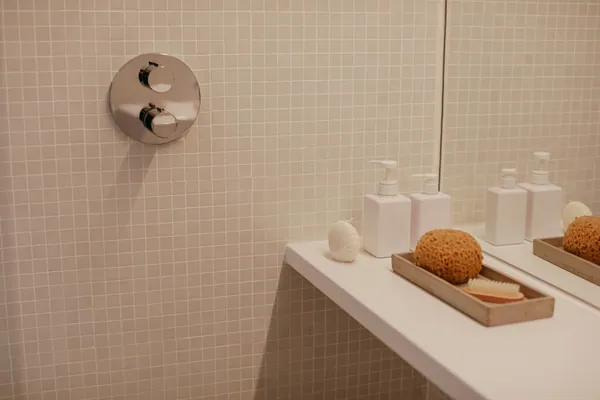
Testing surfaces is important because port soot may be heavier and more adhesive than standard traffic soot, and the standard cleaner may not penetrate effectively.
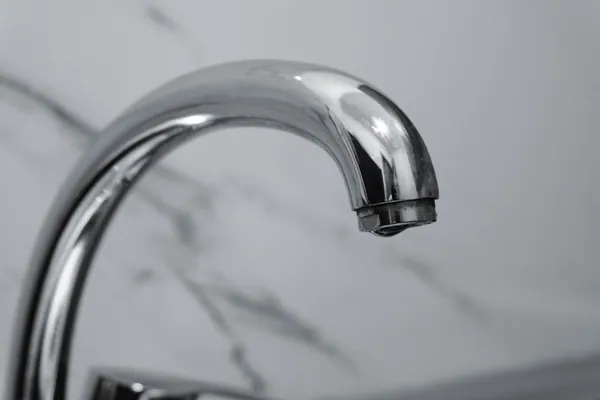
Limescale, soot and mould are three distinct layers, and no single product removes all three with equal efficiency. Sequential treatment of each is necessary.
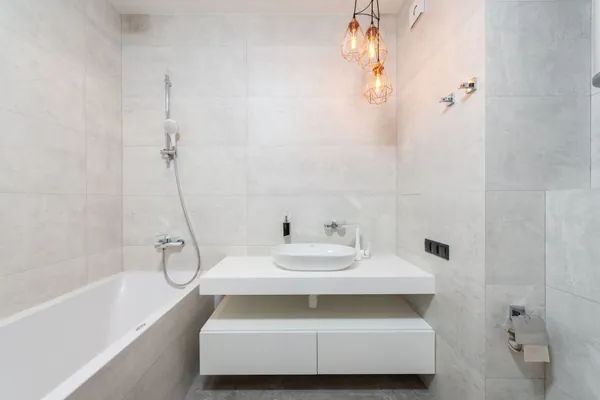
Grout lines are black from a compound of all three components, requiring longer soaking than would be needed in a pure residential area.
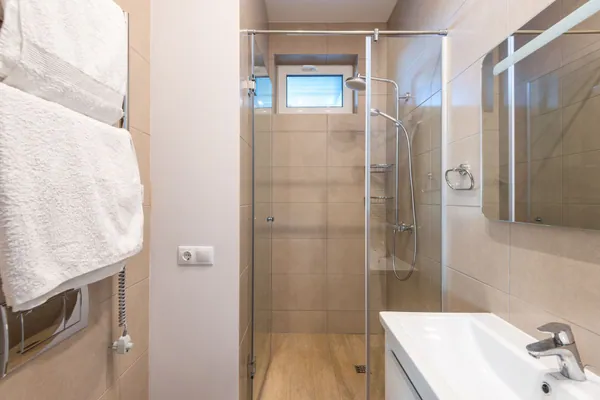
Glass and mirrors are severely clouded by a triple layer, and clearing them requires strong separate treatment focused on the glass alone after general bathroom work.
Drainage may carry oil from street runoff, so confirming free flow and checking for residual blockage before finishing is important in this industrial proximity.
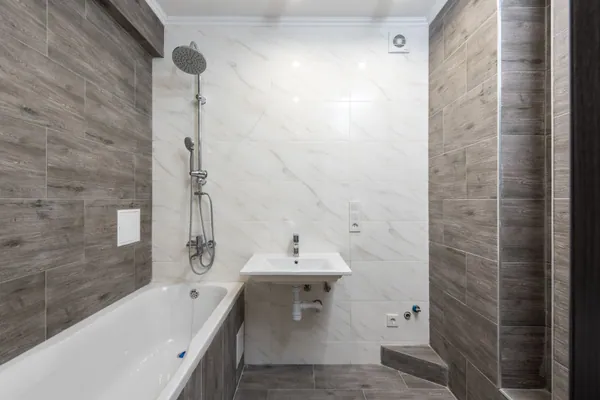
Complete drying after cleaning is critical because humidity and soot return rapidly from the port and truck routes, so any moisture left in grout will immediately trap airborne particles again.
We open the room, take everything off the ledges and shelves, and lift loose hair from the drains before any water or chemical goes down.
Scale on glass, taps and the shower head is not scrubbed off cold.
The joints are treated and scrubbed along the line, top to bottom, because film sits in the porous grout and a flat wipe never enters it.
The bowl, the base joint and the floor trap are done as one stage, since this is where odour lives.
What the products loosened is lifted off, and everything is rinsed downward so nothing dirty settles back onto a cleaned surface.
The damp low corners are dried so nothing feeds mould again, then we walk the room with you.
Mixed district: shops at street level with homes above them
A district adjacent to the port and heavy goods routes with ground floor businesses means bathrooms face a compounded triple problem: limescale from hard water, soot from port traffic, and mould from upward damp. This requires multiple distinct treatment steps rather than a single cleaning protocol.
Proper descalers, matched to each surface, are what move mineral off glass and out of grout.
We send a team, not a single person.
Where scale has already etched the glass or mould has stained the grout for good, we tell you at the inspection.
Nothing is called done until you have walked the room and said so.
Photographs from real jobs carried out by the crew.












The commitment is simple enough to actually keep: we do not leave until you have seen the result and told us what you think of it.
South Jeddah runs from the port and the industrial city down towards Al Khumrah, and homes here sit between the sea and the heavy goods roads. The dust is darker and oilier than in the north, a mix of diesel soot and workshop grit, and it clings to net curtains, window sills and the tops of kitchen cupboards. Floors in the older low rise housing are often plain cement or ceramic tile that darkens where soot is walked in. Humidity from the coast adds mildew in bathrooms and a musty smell in stored fabrics.
We provide these in Al Karamah too, and more than one can share a single visit.



