
The gear reaches the scale
Proper descalers, matched to each surface, are what move mineral off glass and out of grout.
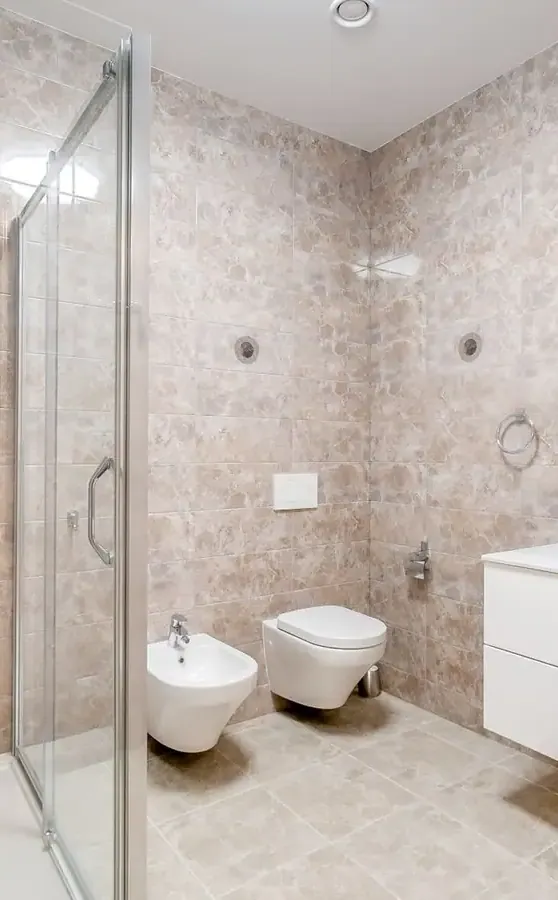
Al Hamra is an established waterfront district where salt and high humidity attack bathrooms year round. The villas and older apartment blocks here have marble floors and metal fittings that need specialised attention because sea salt corrodes base metals and moisture drives mould deep into grout and grout joints that resist casual wiping.
Older taps and mirrors tarnish quickly from salt exposure, and aged grout lines carry deeply embedded mould that surface scrubbing will not touch. For the method itself, see our guide to bathroom cleaning.
The pale marble floors common in older Al Hamra homes show salt rings and grey damp patches that ordinary wiping leaves behind. Stone is delicate and careless cleaning scratches the polished surface, turning shine to dull marks.
Vintage gold-plated and chrome fittings corrode where salt air meets humidity. Corrosion starts as surface discolouration but progresses to pitting that weakens the metal structure underneath if it is not arrested early.
Bathrooms in older Al Hamra buildings have wide grout joints packed with mould from decades of sea humidity. Surface cleaning never reaches the depth where the mould colony is established, so soaking and working the joint properly is the only answer.
An older district on the Red Sea coast where salt-laden air and sustained humidity work together on every bathroom in the area throughout the year.
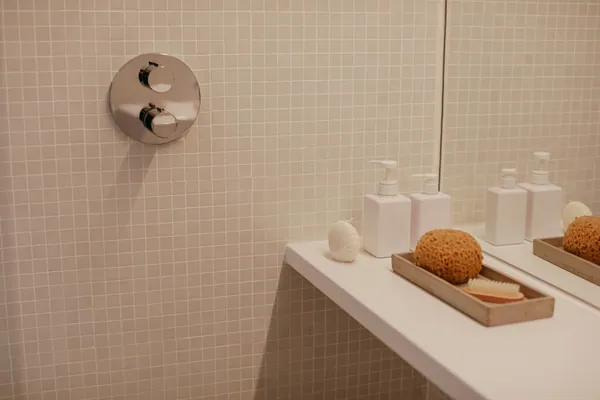
Marble and polished surfaces are sensitive to salt and acidic cleaners, so we test any new product on a hidden corner first before applying it to visible areas.
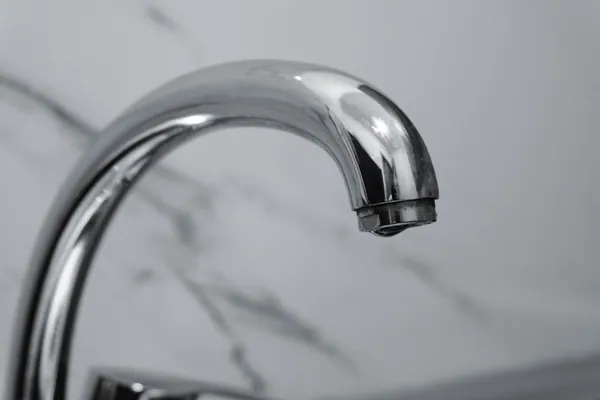
Salt deposits on taps and fittings require prolonged soaking and soft brushes to remove without scratching the metal finish.
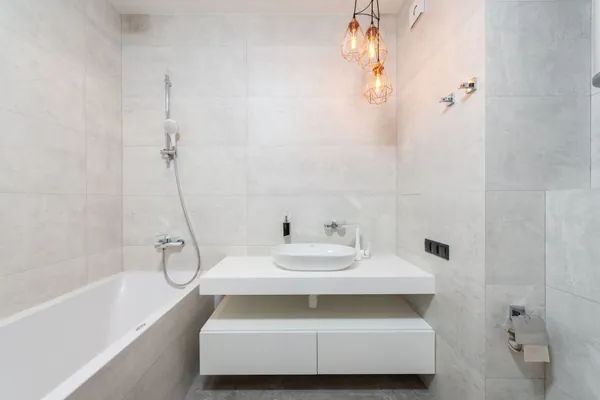
Grout lines here are wide and old, packed with years of mould growth, so we work each joint individually with proper soak time before rinsing.
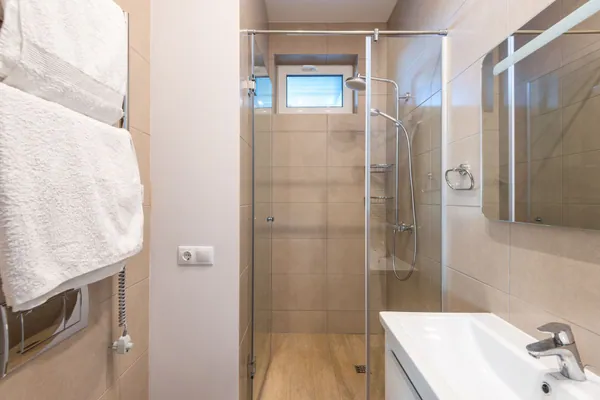
Glass and mirrors need special treatment because salt leaves a persistent film that standard wiping alone cannot shift completely.
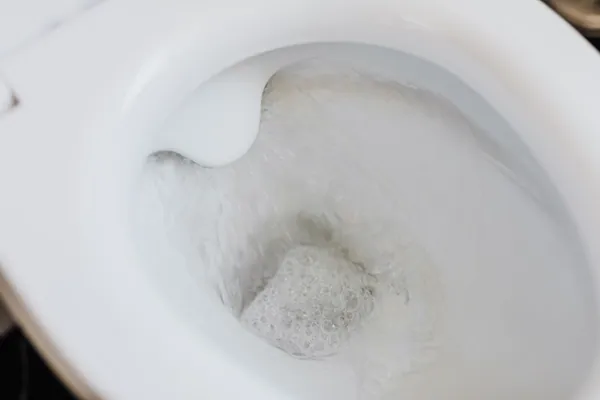
The bath and toilet may be decades old and have thinned walls, so we use gentle products and avoid heavy scrubbing to prevent chips and cracks.
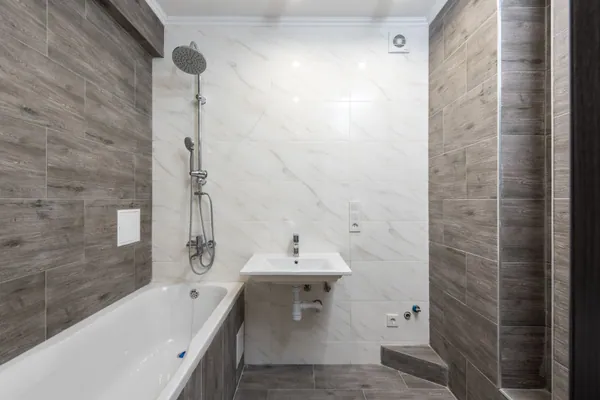
Floor drain and ventilation are critical because continuous air circulation slows both salt redeposition and mould re-establishment.
We open the room, take everything off the ledges and shelves, and lift loose hair from the drains before any water or chemical goes down.
Scale on glass, taps and the shower head is not scrubbed off cold.
The joints are treated and scrubbed along the line, top to bottom, because film sits in the porous grout and a flat wipe never enters it.
The bowl, the base joint and the floor trap are done as one stage, since this is where odour lives.
What the products loosened is lifted off, and everything is rinsed downward so nothing dirty settles back onto a cleaned surface.
The damp low corners are dried so nothing feeds mould again, then we walk the room with you.
Proper descalers, matched to each surface, are what move mineral off glass and out of grout.
We send a team, not a single person.
Where scale has already etched the glass or mould has stained the grout for good, we tell you at the inspection.
Nothing is called done until you have walked the room and said so.
Photographs from real jobs carried out by the crew.












The commitment is simple enough to actually keep: we do not leave until you have seen the result and told us what you think of it.
Coastal area: high humidity and salt air through the year
Salt from the sea deposits on every polished surface and attacks thin base metals over time. High humidity here means that ventilation after cleaning matters more than the cleaning product itself.
We provide these in Al Hamra too, and more than one can share a single visit.



