
We test before we degrease
Testing the solution on a hidden spot is a step we treat as necessary, not optional.
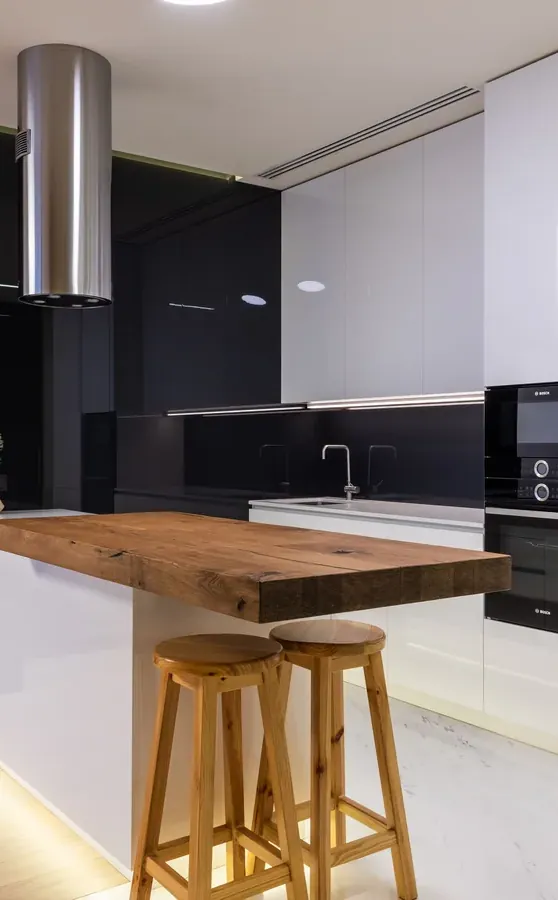
Al Hijaz kitchens face a compound problem: nearby workshops and light commercial activity send diesel soot and fine metal particles into the air. These particles do not settle on surfaces alone. They penetrate cooking grease and bond to it, creating a grey-brown film that water will not shift. A kitchen here needs a team that understands the dust is heavier and more oily than in purely residential areas.
Workshop dust and diesel soot from light traffic form a grey, sticky layer on kitchen surfaces that does not wash off with water alone and clings harder than cooking grease alone would. For the method itself, see our guide to kitchen cleaning.
Neighbouring workshops send fine metal particles and diesel grit into the air. These do not merely settle on top of grease. They become suspended in the fat layer itself. The degreaser must dissolve both the fat and the mineral particles simultaneously, not just cut the grease.
A kitchen in the lower storeys receives workshop dust direct from the street and from openings before it spreads upward. Window and door frames let it through more easily at ground level. The buildup here is faster and denser than in higher flats.
The hood filter here traps not just fat but fine metallic dust. Scrubbing the filter hard can scratch the delicate mesh. Cleaning requires careful soaking and gentle agitation to dissolve the grease and release the particles, without damaging the filter itself.
Al Hijaz is a mixed residential and commercial district in east Jeddah near the University of Jeddah Road and Wadi Al Ghawla, with relatively modern housing and small businesses and shops on the main streets.
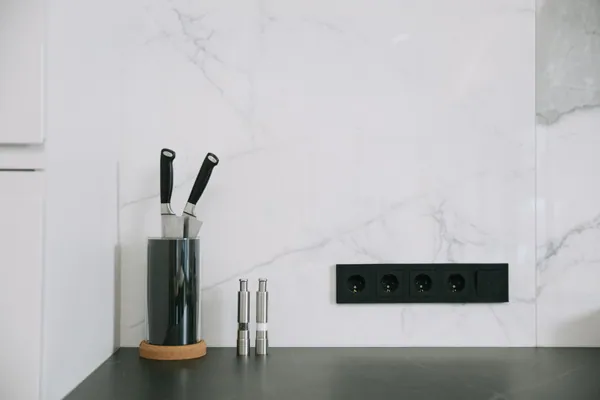
Cabinet fronts carry a grey-brown layer of grease and embedded workshop dust, not yellow grease alone. The degreaser must dissolve the whole compound.
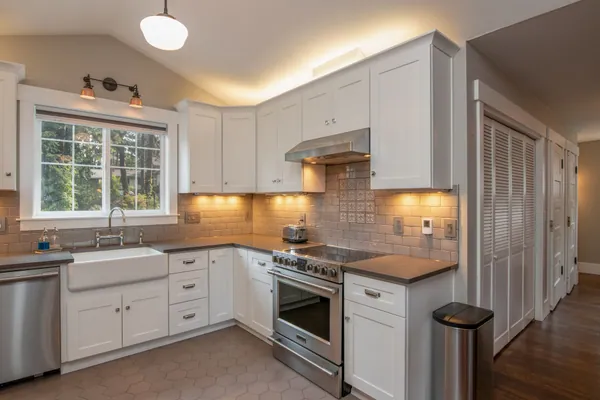
The extractor hood and filter here hold fine metal particles trapped in the grease. Longer soaking and gentle agitation are needed. Hard scrubbing can tear the filter mesh.
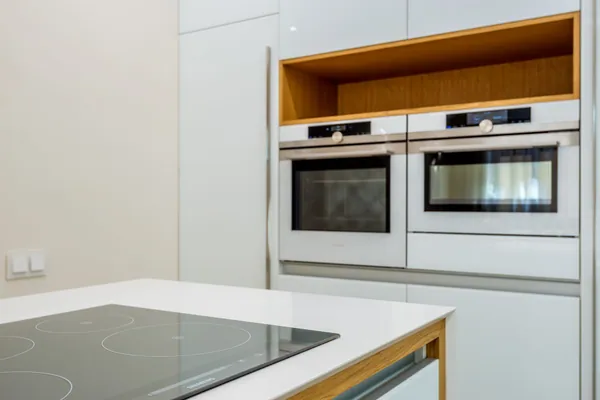
The hob and splash tiles carry a dark grey-brown stain from dust and grease combined. Soaking with the degreaser and careful wiping removes it without scratching the ceramic.
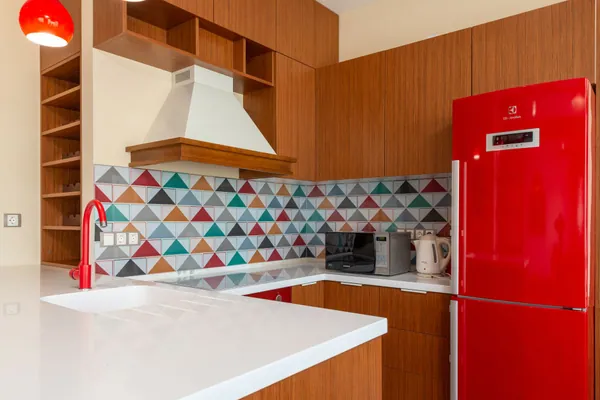
The tile grout is porous and absorbs the fine dust. Surface wiping will not reach it. The degreaser must soak into the grout to dissolve the trapped particles and fat.
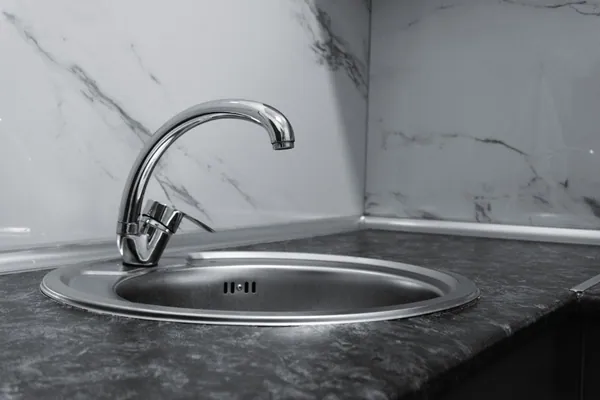
Sink and mixer are stained grey-brown around the seams and the drain. The degreaser needs to reach into the gaps where the dust and fat accumulate.
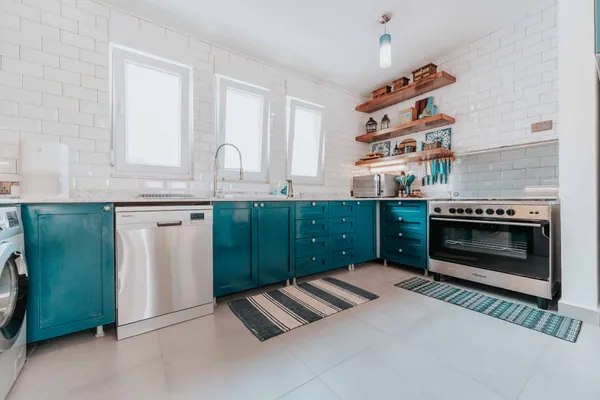
The floor collects grey, damp dust in corners and grout lines. We sweep thoroughly first, then wet-wipe with water to avoid pushing particles around.
Painted cabinets, laminate, natural stone and stainless steel do not take the same degreaser.
We start high, the tops of cabinets and the hood, and work down to the floor.
The degreaser is put on the heavy areas and given time to break the oil down before it is wiped.
The metal filter carries the worst of the grease and is soaked and worked on its own, not just wiped in place, because a clogged filter puts the oil straight back into the air.
The burners, the tiled splash and the grout lines take focused work, since the grout darkens first and a flat wipe passes over it.
We go over the kitchen with you before the team leaves.
Your kitchen in Al Hijaz sits near the University of Jeddah Road and Wadi Al Ghawla, which means commercial and workshop activity nearby sends dust directly into your kitchen. We schedule the work to begin with the kitchen first, leaving the degreaser to work on the compound layer while we cover the other areas.
Testing the solution on a hidden spot is a step we treat as necessary, not optional.
We send a team, not a single worker.
The degreasers and tools come with the team.
If what the kitchen needs is a repair or pest treatment rather than a clean, we say so.
Photographs from real jobs carried out by the crew.












The commitment is simple enough to actually keep: we do not leave before you have seen the result and told us what you think of it.
East Jeddah lies furthest from the sea and closest to the open ground and hills beyond the ring roads, so the air is drier and the dust is coarser and paler than on the coast. It comes in under doors and settles on every flat surface overnight, making sofas, mattresses and curtains the heaviest part of the routine. Floors are mostly ceramic tile in the apartment districts and marble in the villa areas, both scratched by grit that is mopped rather than swept. Roof tank water leaves a grey film of sediment in baths and basins.
We provide these in Al Hijaz too, and more than one can share a single visit.



