
Clean first, then disinfect
The common mistake is spraying disinfectant over dirt.
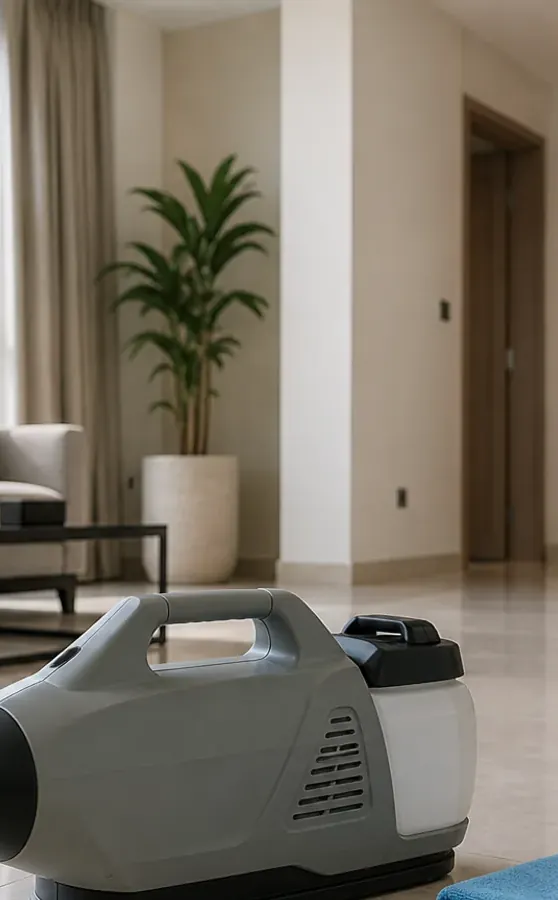
Briman is an old popular district in east Jeddah lying directly south of King Abdulaziz Airport and near the Haramain railway line. Mixed popular housing sits alongside scattered light industrial activity, and gaps in urban planning mean drainage and air flow are poor. Disinfection here cannot follow the same method as newer neighbourhoods because the contamination is layered: household dust mixed with industrial grit and grease, combined with chronic dampness from old pipework.
Gaps in modern infrastructure mean old drainage systems and narrow streets trap dust and humidity in the flats and shops, where ventilation is poor and moisture stagnates, creating ideal conditions for bacterial growth. For the method itself, see what disinfection and sanitisation involves.
Light industrial activity nearby releases metal particles and machine oil fumes that settle on surfaces as a brown layer of mixed contamination that plain water cannot touch. Disinfectant alone fails against this: the layer must be removed first by degreasing, or the disinfectant sits on top of the problem rather than reaching what lies underneath.
Tight street geometry traps dust and moisture between buildings, so air does not circulate. Disinfection requires vigorous ventilation afterward, but the narrow lanes and few openings make this difficult, leaving fumes and moisture trapped longer than in open neighbourhoods.
Aging infrastructure means corroded pipes and weak drain lines, through which moisture and smell seep into walls. Bacteria colonise old pipes for years, so walls stay damp and smell persists even after surface disinfection.
Scattered industrial operations nearby release metallic dust and machine oils in addition to ordinary street dust, so contamination accumulates faster and darker than in purely residential areas, with layers that water alone cannot remove.
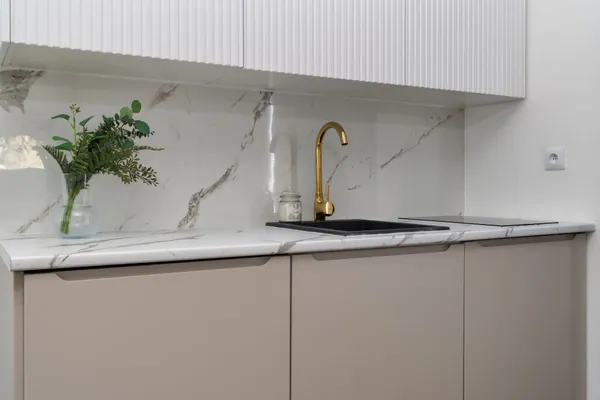
Cleaning before disinfecting is essential here because the mix of household and industrial contamination requires heavy-duty degreasing to remove the oily layer before any disinfectant can work.
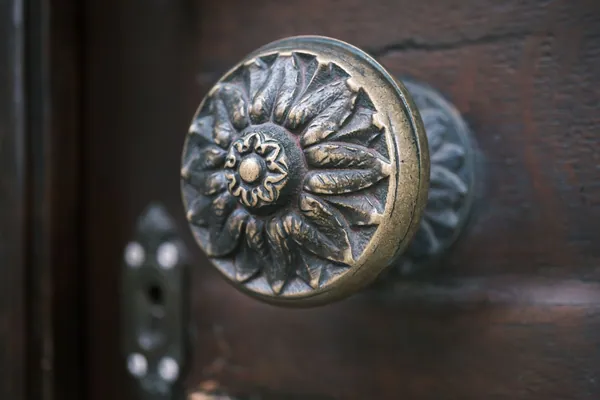
High-touch surfaces like door handles and railings accumulate thick grey-brown dust from both building drainage and industrial dust blowing in from nearby sites.
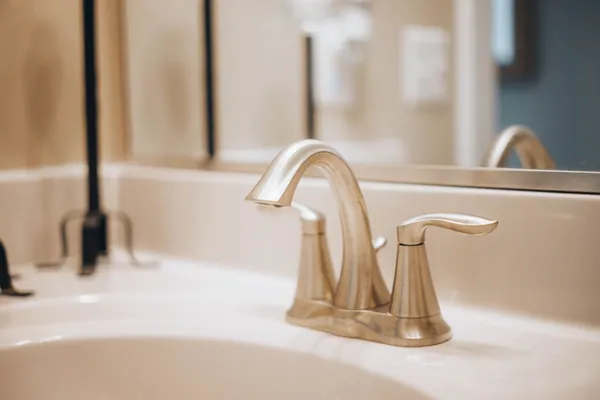
Bathrooms show constant dampness from old pipes, and you may find black mould on walls behind mirrors and behind heaters or plumbing fixtures.
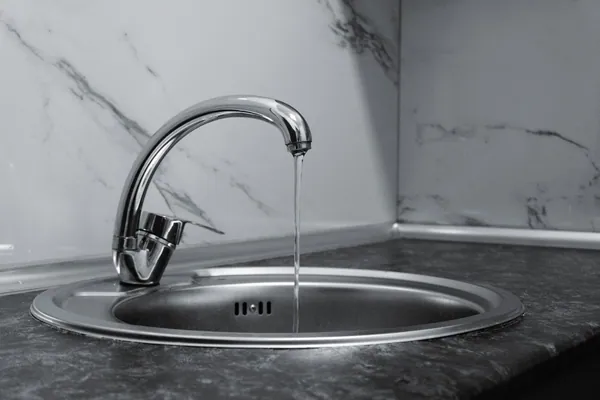
Kitchen and food preparation surfaces collect both household grease and industrial dust together, requiring a strong degreaser before disinfectant can have any effect.
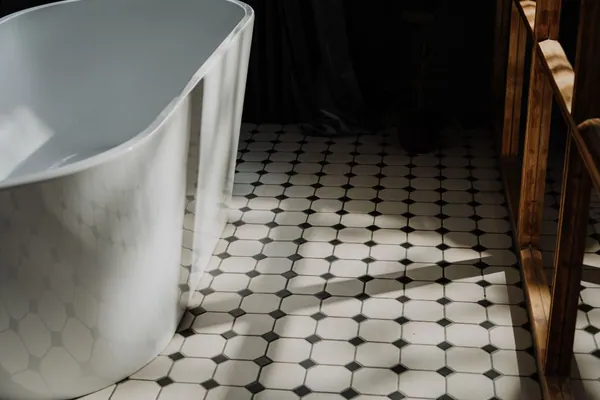
Drains and grout lines stay damp year-round, with old water and rust creating an ideal breeding ground for bacteria and mould that surface cleaning alone cannot reach.
Contact time may need to be extended because high ambient humidity slows drying, and ventilation requires special attention because narrow streets do not allow natural air circulation after treatment.
A move-in, an illness and an after-party aren't the same job.
Grime and grease shield what's under them.
A disinfectant has to stay wet on the surface to work.
Handles, switches, taps and rails are done by hand because they carry the most and need direct contact that fogging alone doesn't give.
Once the hard surfaces are done, a fine fog reaches the air, the fabrics and the corners a cloth can't, settling over what hand-wiping misses.
We open up and air the rooms, then walk the home with you before leaving.
The common mistake is spraying disinfectant over dirt.
The company runs a large crew, and we send a team rather than one person.
The foggers and the products come with the team.
If what you need is deep cleaning or mould work rather than disinfection, we tell you.
Photographs from real jobs carried out by the crew.












The commitment is simple enough to actually keep: we don't leave until you've seen the result and had your say on it.
Mixed district: shops at street level with homes above them
In Briman's mixed setting with industrial activity nearby, disinfection must be stronger than in other popular neighbourhoods, because industrial grease and chronic dampness demand a different approach.
We provide these in Briman too, and more than one can share a single visit.



