
Clean first, then disinfect
The common mistake is spraying disinfectant over dirt.
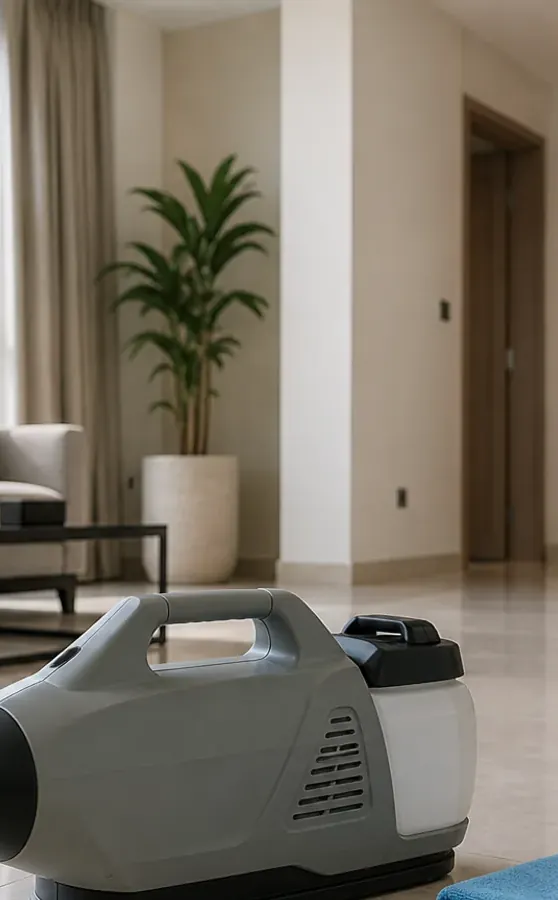
Al Thaghr is a south Jeddah district that requires disinfection attuned to its coastal environment, where dark dust and diesel soot deposit on surfaces and in fabrics, and mould grows rapidly. Our treatment accounts for these unique conditions that define the district.
Residents live between the port and freight routes, and the Gulf dust here is darker and oilier than in the north, a mix of diesel soot and workshop grit that clings stubbornly and resists simple cleaning. For the method itself, see our guide to disinfection and sanitisation.
Al Thaghr lies between the port and heavy goods routes, and dust here is not dry: it carries diesel oils and metal particles from workshops. This grime adheres to net curtains, window sills and kitchen tops with force. Pre-cleaning requires more effort, and the disinfectant must penetrate beneath the oily layer to reach the surface.
The sea is very close, coastal moisture is high, and mould grows rapidly in bathrooms, kitchens and stored fabrics. Plain cement and simple ceramic tile darken where soot is walked in, and musty smell in stored textiles signals fungal spread. Disinfection must eliminate both fungal and bacterial pathogens.
Older homes in Al Thaghr have plain cement floors or simple ceramic tile that blacken easily. Low-rise buildings trap moisture more, and ventilation is weaker. Disinfection needs extended contact time because moisture shields the product, and thorough ventilation afterward is essential.
The district is bounded by Old Makkah Road to the south and holds villas and apartment buildings alongside Al Thaghr Model Schools and Al Thaghr Hospital, situated between the sea on one side and heavy goods roads on the other.
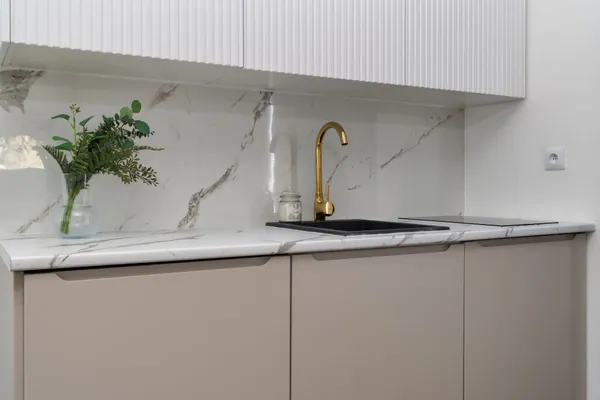
Surfaces in Al Thaghr are soiled with soot and oils from the port and roads, and cleaning before disinfecting must use a strong degreaser to remove oils before disinfection begins.
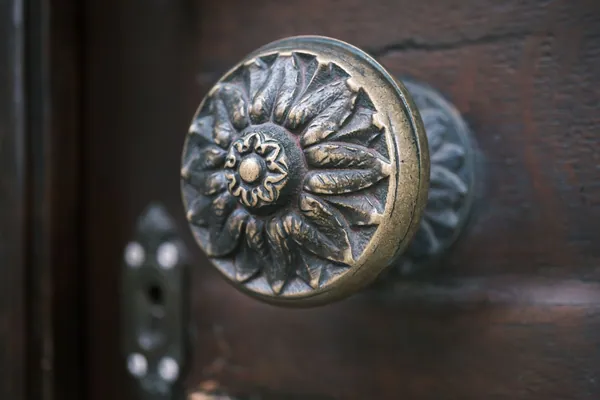
Door handles, doors and stairs are touched by many hands but are also stained with soot and dust, and cleaning them first before disinfection yields better results than treating a soiled surface.
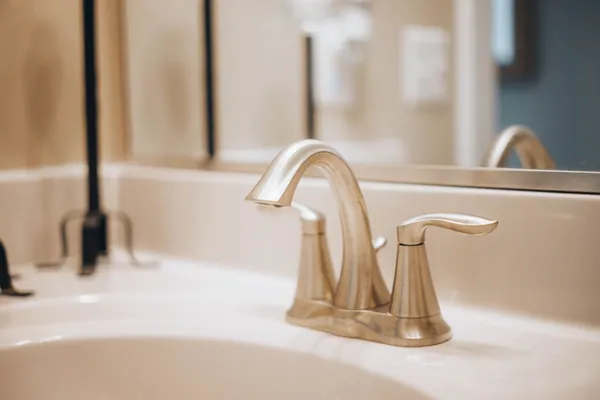
Bathroom taps, toilet handles and sink surfaces in a home next to the sea are exposed to coastal moisture and mould, and disinfecting them needs special attention because humidity returns fast.
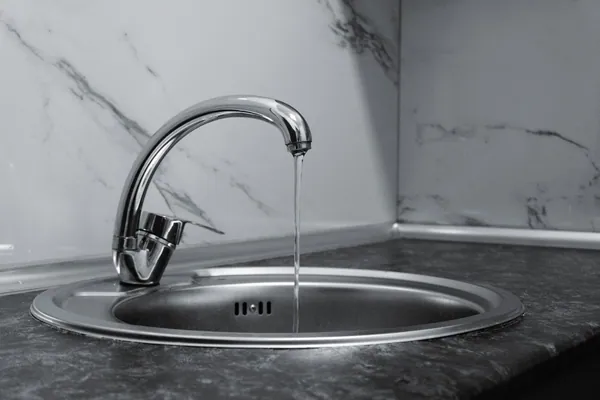
Kitchen surfaces, refrigerator handles and cupboard fronts in Al Thaghr are exposed to mould and moisture, and food can be affected by musty odour unless we disinfect and ventilate thoroughly.
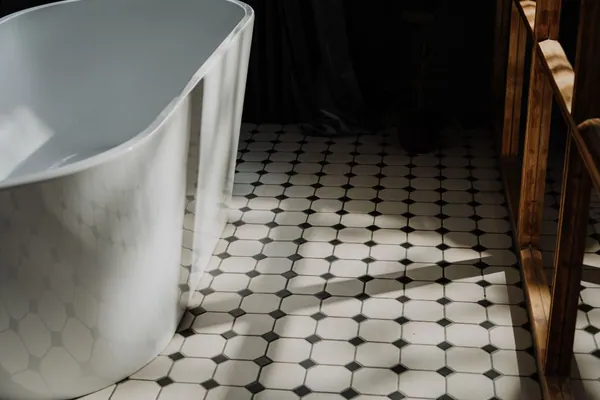
Drains and grout lines harbour heavy mould and bacteria due to high coastal humidity, and we treat them with a strong antifungal and antibacterial product.
Ventilation after disinfection is more essential in Al Thaghr than in any other district because coastal humidity is very high and air circulation may need hours rather than one.
A move-in, an illness and an after-party aren't the same job.
Grime and grease shield what's under them.
A disinfectant has to stay wet on the surface to work.
Handles, switches, taps and rails are done by hand because they carry the most and need direct contact that fogging alone doesn't give.
Once the hard surfaces are done, a fine fog reaches the air, the fabrics and the corners a cloth can't, settling over what hand-wiping misses.
We open up and air the rooms, then walk the home with you before leaving.
Access to Al Thaghr and work scheduling are straightforward via Prince Majid Road that runs through its centre, and proximity to Al Thaghr Model Schools and Al Thaghr Hospital gives us clear landmarks for route planning and timetabling.
The common mistake is spraying disinfectant over dirt.
The company runs a large crew, and we send a team rather than one person.
The foggers and the products come with the team.
If what you need is deep cleaning or mould work rather than disinfection, we tell you.
Photographs from real jobs carried out by the crew.












The commitment is simple enough to actually keep: we don't leave until you've seen the result and had your say on it.
South Jeddah runs from the port and the industrial city down towards Al Khumrah, and homes here sit between the sea and the heavy goods roads. The dust is darker and oilier than in the north, a mix of diesel soot and workshop grit, and it clings to net curtains, window sills and the tops of kitchen cupboards. Floors in the older low rise housing are often plain cement or ceramic tile that darkens where soot is walked in. Humidity from the coast adds mildew in bathrooms and a musty smell in stored fabrics.
We provide these in Al Thaghr too, and more than one can share a single visit.



