
Clean first, then disinfect
The common mistake is spraying disinfectant over dirt.
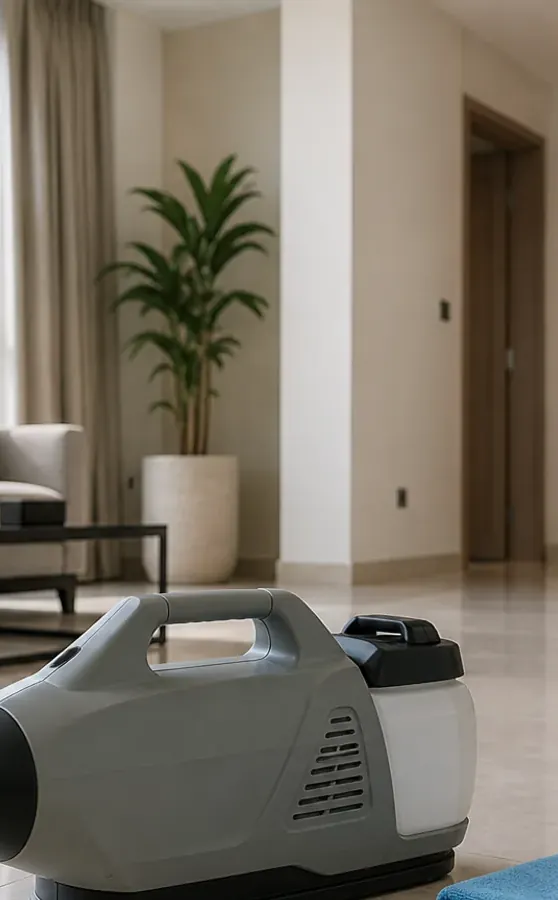
Al Rawabi lies south between the port, industrial city and heavy goods routes. Diesel soot and workshop dust stick to everything, heavier and oilier than ordinary dust, and coastal humidity adds mould to fabrics and bathrooms. Disinfection here must handle a different kind of soil.
Surfaces here blacken from diesel soot where people walk, and net curtains trap a fine black layer that is only visible when backlit by strong sunshine. For the method itself, see what disinfection and sanitisation involves.
Workshop and diesel dust is heavier and oilier than ordinary dust, sticking to surfaces and attracting more dirt. Standard cleaning may clean the surface but leave an oily layer beneath that blocks disinfectant penetration.
Proximity to the port means high humidity, and road grease creates the ideal medium for rapid mould growth. Fabrics trap moisture and soot together and become a mould incubator within days.
Ceramic and cement floors here darken where foot traffic is constant, and soot accumulates deep in grout lines. Surface disinfection will not remove embedded soot, so deep cleaning must come first.
The district sits between heavy truck routes, the port and industrial zones, so dust here is black and oily, clinging to curtains, windows and clothes, and the damp air speeds mould growth in fabrics and plumbing.
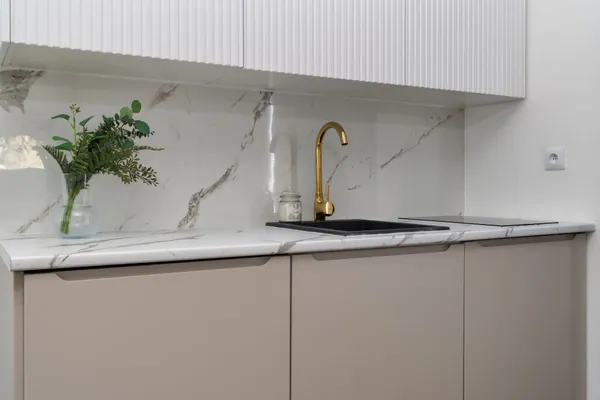
Deep cleaning first must remove diesel soot and heavy grease from every surface before disinfection begins to work on what lies underneath.
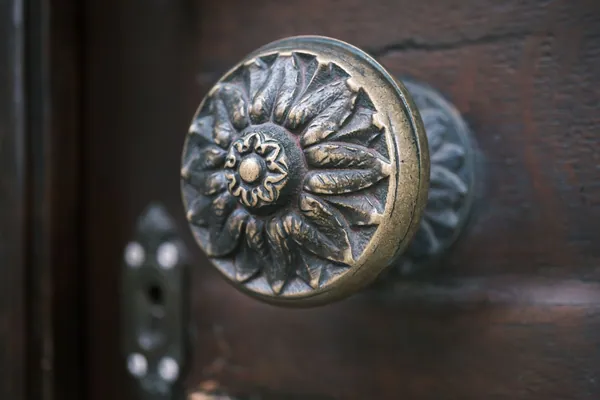
High-touch surfaces here accumulate road grease and soot, not just ordinary bacteria, and need treatment with heavy-duty cleaners.
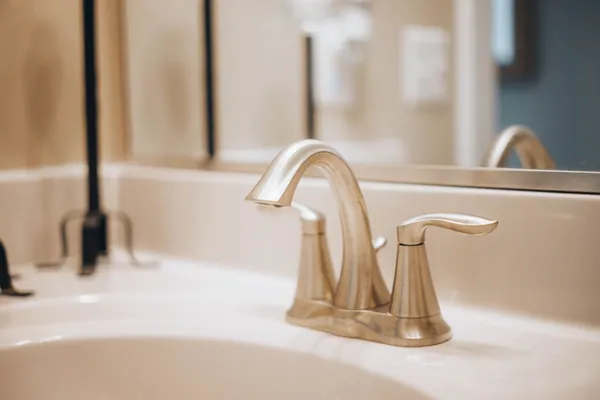
Taps and drains trap soot and mould together, and road grease settles around handles where hands touch them constantly.
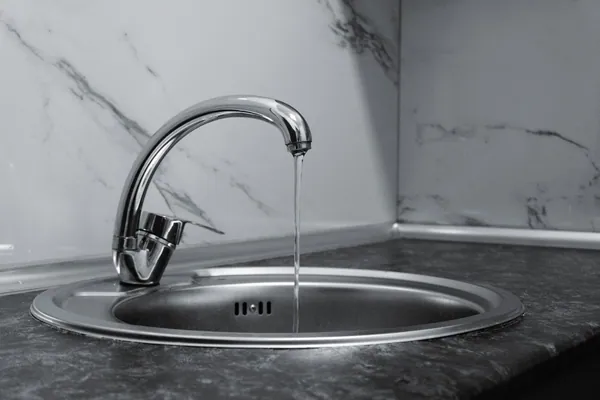
Kitchen surfaces here combine cooking grease with road grease layers, so cleaning needs a strong degreaser that cuts through multiple deposits.
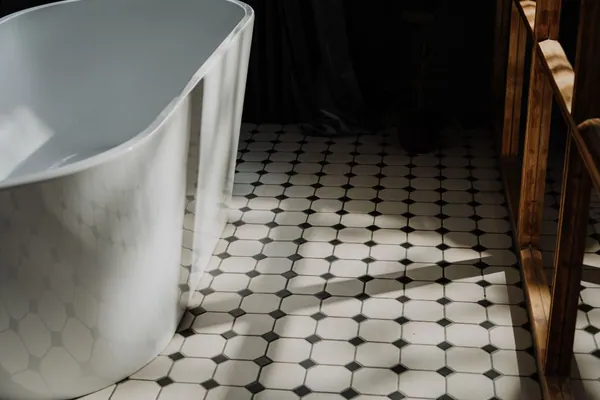
Drains and grout lines hold diesel soot embedded deep, and humidity speeds mould growth in these areas. They need brush cleaning and strong treatment before disinfection.
Ventilation after disinfection must be strong and sustained, because port humidity will quickly reabsorb moisture into fabrics if air movement stops.
A move-in, an illness and an after-party aren't the same job.
Grime and grease shield what's under them.
A disinfectant has to stay wet on the surface to work.
Handles, switches, taps and rails are done by hand because they carry the most and need direct contact that fogging alone doesn't give.
Once the hard surfaces are done, a fine fog reaches the air, the fabrics and the corners a cloth can't, settling over what hand-wiping misses.
We open up and air the rooms, then walk the home with you before leaving.
Access to Al Rawabi apartments is via Old Makkah Road to the north or from Bin Laden Park to the east. Work begins at the nearest building entrance and extends through the flat and common areas if needed.
The common mistake is spraying disinfectant over dirt.
The company runs a large crew, and we send a team rather than one person.
The foggers and the products come with the team.
If what you need is deep cleaning or mould work rather than disinfection, we tell you.
Photographs from real jobs carried out by the crew.












The commitment is simple enough to actually keep: we don't leave until you've seen the result and had your say on it.
South Jeddah runs from the port and the industrial city down towards Al Khumrah, and homes here sit between the sea and the heavy goods roads. The dust is darker and oilier than in the north, a mix of diesel soot and workshop grit, and it clings to net curtains, window sills and the tops of kitchen cupboards. Floors in the older low rise housing are often plain cement or ceramic tile that darkens where soot is walked in. Humidity from the coast adds mildew in bathrooms and a musty smell in stored fabrics.
We provide these in Al Rawabi too, and more than one can share a single visit.



