
The access to reach it safely
A crystal fixture over a stairwell is not a job for a kitchen stool.
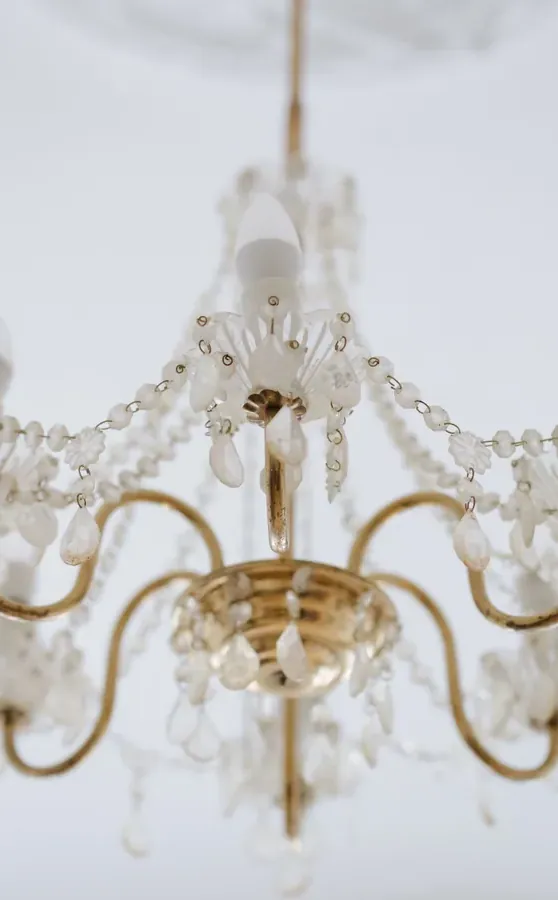
Al Manar is a mixed district in east Jeddah stretching from Hada Al Sham Road down to Al Samir, with villas, modest apartment buildings and small shopping centres. The air here is drier than on the coast, the dust coarser and paler, humidity lower but dust penetration higher. Chandeliers collect a dense fine dust and need regular attention to stay bright, as the grit is finer but settles more heavily.
Dust in east Jeddah enters under doors and settles on every surface overnight, and chandeliers dull faster than those in coastal neighbourhoods. For the method itself, see our guide to chandelier cleaning.
East Jeddah is furthest from the sea and closest to open ground and hills. The air is dry and the dust is coarser and paler in colour. It comes in under doors and through narrow window frames and settles on every flat surface before morning. Chandeliers collect this coarse dust and dull noticeably faster than those in coastal neighbourhoods. The dust itself is harsher and can scratch if not removed carefully.
Villas in Al Manar have marble floors and flats have ceramic tile, both easily scratched by sand and grit if not swept before wet cleaning. When cleaning the chandelier, the floor beneath it requires careful protection from water drips and falling dust particles from the work above.
Water from roof tanks in east Jeddah leaves mineral deposits. This grey sediment settles in basins, sinks and drains. If a chandelier hangs above a kitchen sink or bathroom basin, this mineral deposit may affect the fixture below it. Cleaning must remove these deposits from every piece.
A mixed district in east Jeddah with villas, modest apartment buildings and shopping centres, the air is dry and dust is coarser and paler than on the coast, floors are ceramic tile in flats and marble in villas.
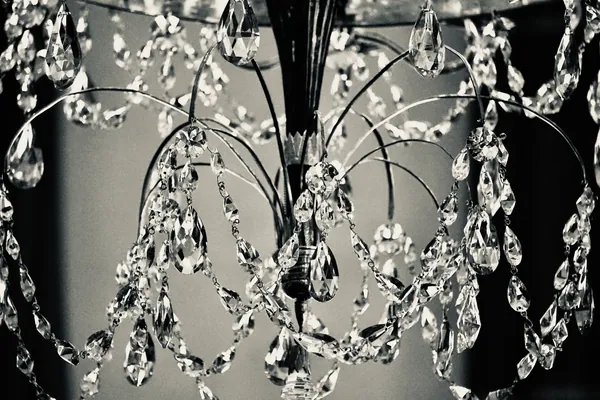
Chandeliers in Al Manar vary widely: new villa fixtures and older flat fixtures, genuine crystal and other materials. We inspect type and materials first before deciding the appropriate washing method.
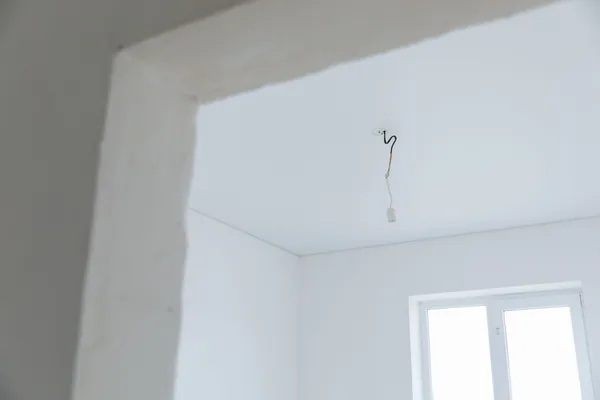
Before any work, the electrical main switch is turned off and we verify there is no power with a specialized testing device.
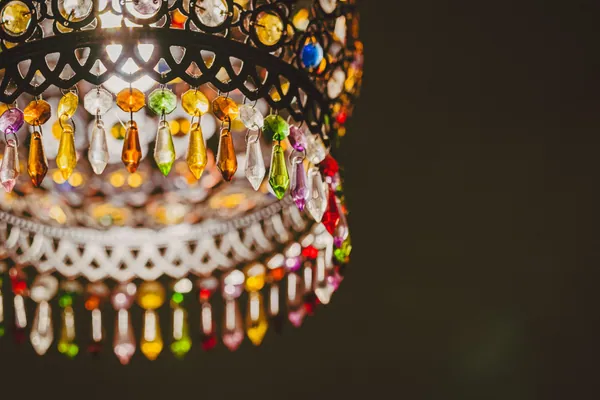
The chandelier is photographed in detail before removing any piece, so we see its arrangement and how it is mounted and wired.
Each part is washed separately in warm water with a soft brush, with crystals and metalwork kept apart.
Frame and arms and spaces between components are cleaned carefully, and any mineral deposits from the water are removed with a soft cloth.

After complete drying, the chandelier is reassembled in the original arrangement, power is restored, and the fixture is lit to verify everything works.
The circuit is switched off before anything is touched, and warm bulbs are given time to cool.
We check how it is built, which crystals are loose, and how it comes apart before removing a thing.
The area under the fixture is covered before we start, so a dropped crystal lands soft and nothing marks the floor or table below.
Where the piece allows, crystals come off and are washed and dried individually.
With the crystals off or aside, the frame, arms, bulb holders and ceiling mount are wiped down, since that is where film and webs hide behind the glass.
Every crystal goes back to its place, the fixture is switched on and checked, and we walk the room with you.
A crystal fixture over a stairwell is not a job for a kitchen stool.
We send a team, not one person, so crystals come off, get washed and go back in one visit, without a lone worker hurrying a fragile piece to finish before dark.
Whether crystals come off or are cleaned in place depends on how the fixture is built.
Nothing is done until the fixture is back together, switched on, and you have seen it throw its light.
Photographs from real jobs carried out by the crew.












The commitment is simple enough to actually keep: we do not leave until the fixture is reassembled, lit, and you have seen it for yourself.
East Jeddah lies furthest from the sea and closest to the open ground and hills beyond the ring roads, so the air is drier and the dust is coarser and paler than on the coast. It comes in under doors and settles on every flat surface overnight, making sofas, mattresses and curtains the heaviest part of the routine. Floors are mostly ceramic tile in the apartment districts and marble in the villa areas, both scratched by grit that is mopped rather than swept. Roof tank water leaves a grey film of sediment in baths and basins.
We provide these in Al Manar too, and more than one can share a single visit.



