
We treat where they live
The result comes from reaching the seams, joints and cracks, not from how much is sprayed.

Al Hamdaniyah is a densely built east Jeddah district near the airport, with apartment blocks, villas and sprawling shops and hypermarkets on Al Hamdaniyah Street and Al Masurah Street. Bed bugs spread rapidly between closely-packed units and beneath shared floors. Treatment must address the paths bugs use to move between flats, not just the single flat in isolation.
New villas and closely-spaced apartment blocks here share thin walls and numerous gaps around shared pipework, so bed bugs migrate easily between units and never remain confined to one location. For the method itself, see how we approach bed bug treatment.
Shared pipework and electrical conduits between flats become highways for bugs to cross freely. Checking the neighbouring flat for infestation is essential before treatment begins, or bugs re-enter from that direction.
Many Al Hamdaniyah residents import new furniture and accumulate multiple large cases and boxes. Bed bugs hide in the cracks of boxes and foam packing. We inspect new luggage before it enters the bedroom.
Leaks from shared drains and moisture from external condensers create persistent dampness in corridors and wall cavities where bed bugs cluster and shelter during the day.
Very high residential density with major shopping centres, fast food restaurants and small hotels creates ideal conditions for bed bugs to spread via furniture, clothing and luggage moving between dwellings.

Initial inspection in Al Hamdaniyah must extend to neighbouring units and floors above and below, because shared pipes and services allow bed bugs to migrate horizontally and vertically between flats.

Mattresses and newly imported furniture may harbour eggs that have not yet hatched, so we inspect boxes and new cases carefully and focus on furniture padding.
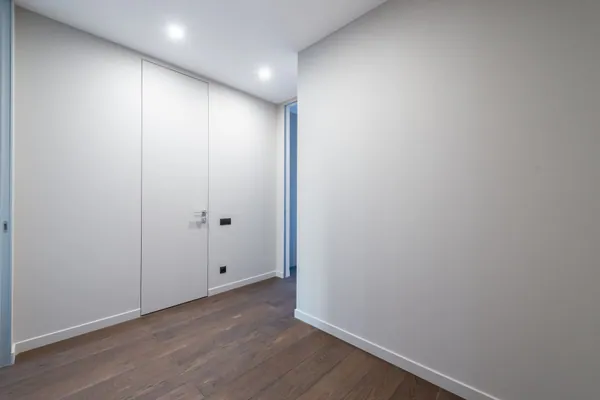
Gaps around pipes and services between flats are the primary route for bugs, so sealing and treating these takes priority over treating mattress seams in some cases.

Carpet edges, heavy curtains and gaps beneath furniture trap insects and eggs, so we focus on these boundaries rather than open floor areas.
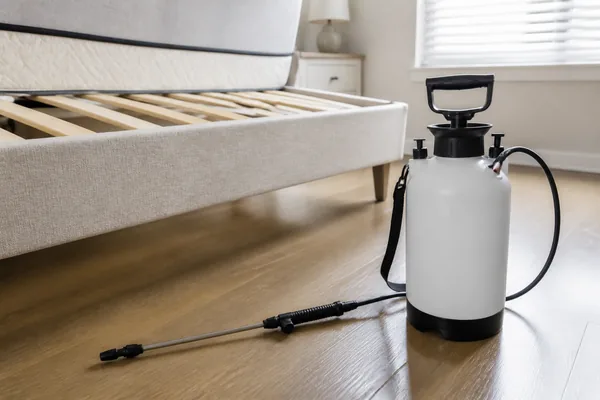
Treating eggs that hatch after the first visit is crucial to breaking the cycle, and the heat in Al Hamdaniyah accelerates egg hatching.
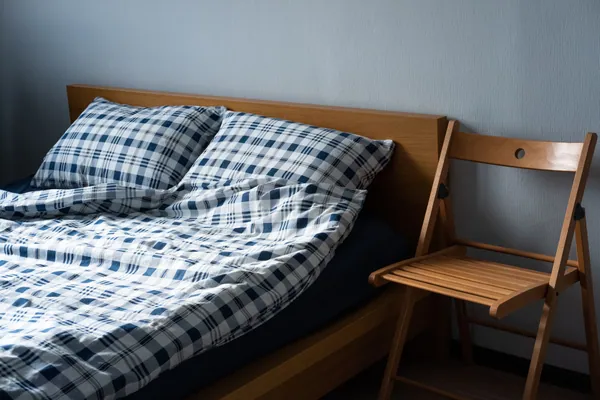
Corridors, stairwells and lift shafts are common paths for bed bugs, so we recommend inspecting these areas and may treat door edges and dark corners.
Before anything is applied, we inspect the seams, frame joints, headboard and skirting to locate the harborage points.
Visible bugs and eggs in reachable spots are removed physically first, which lowers the population immediately and makes the treatment work on less.
Applied into the seams, joints and cracks where they actually shelter, not misted across the open mattress where they never sit during the day.
We work outward from the bed to the surrounding furniture and skirting, because by the time you notice them they have usually started to spread.
Washing and hot-drying bedding, clearing clutter and keeping the layout stable between passes is half the result.
Eggs are shielded and survive the first treatment.
Mixed district: shops at street level with homes above them
In a mixed district like Al Hamdaniyah, constant movement of workers, employees and shoppers between the ground floor shops and apartments above facilitates bed bug entry via clothing and luggage, and the extreme proximity between units means bugs spreading from one flat reach neighbouring units with remarkable speed.
The result comes from reaching the seams, joints and cracks, not from how much is sprayed.
We do not pretend one visit ends it.
The company runs a large crew, and the team arrives with the materials and a plan for the layout, so the whole affected area is handled in the visit.
If it is early and contained we say so, and if it is advanced we say that too.
Photographs from real jobs carried out by the crew.












The commitment is one you can hold us to: an honest read of the situation, and no work or cost added without telling you first.
Within the crowded Al Hamdaniyah zone, we use Al Hamdaniyah Street and Al Masurah Street as the axes that divide the district, pinpointing building locations precisely and tracking neighbouring units connected by shared pipes and services.
We provide these in Al Hamdaniyah too, and more than one can share a single visit.



