
We treat where they live
The result comes from reaching the seams, joints and cracks, not from how much is sprayed.

Al Firdous is a newer residential district along Madinah Road and Prince Abdulmajeed Road, filled with planned villas and apartment blocks built to modern standards. Bed bugs hide not on the visible mattress but deep in the seams, frame joints and wall cracks. Effective treatment starts where they actually hide, not where they appear.
New mattresses with low-profile bases restrict direct access, and neighbouring units need horizontal coordination to prevent horizontal transmission across boundaries. For the method itself, see how we approach bed bug treatment.
Newer buildings in Al Firdous sit on concrete foundations with hairline cracks that run deep. Bed bugs nest in these cracks far below the surface where surface spray cannot reach them. Treatment requires targeted injections, not blanket spraying of the floors.
Modern bed frames and multi-angle furniture create dozens of hiding points. Every joint, corner and assembly point is a potential refuge. Inspection before treatment pinpoints which joints are occupied and which remain clear.
The closely spaced villas and apartments of Al Firdous enable bed bugs to move between homes if only one is treated. The treatment plan accounts for neighbouring units and shared entry points, limiting reintroduction.
Modern housing with contemporary designs and new-standard foundations, apartments and villas with new furniture and multi-level frame joints, tight seams and precision architecture that offers countless hiding places.

Inspection in a modern apartment starts at the mattress and frame, then the walls and gaps around furniture, electrics and pipes.

Seams in new mattresses are tight; treatment requires precise injection, not surface spraying.
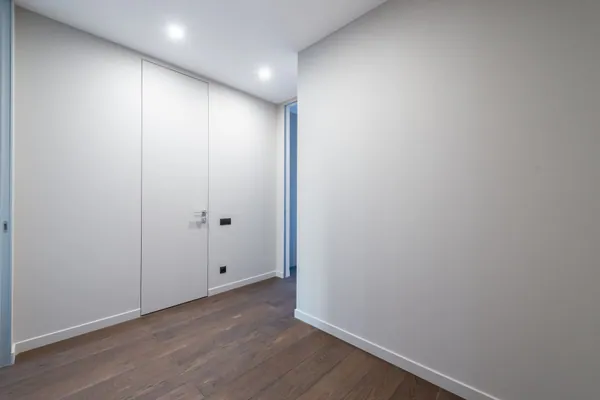
Hairline cracks in walls and gaps around pipes and conduits are safe harbours, reached only by targeted application methods.
Carpet is rare in new apartments, but gaps between floor tiles and walls and the perimeter of each room are common harbours.
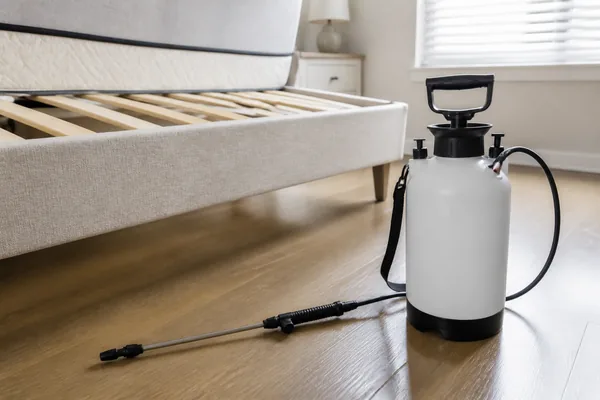
Treatment materials penetrate into eggs held deep in cracks over the following weeks, not from the initial spray itself.
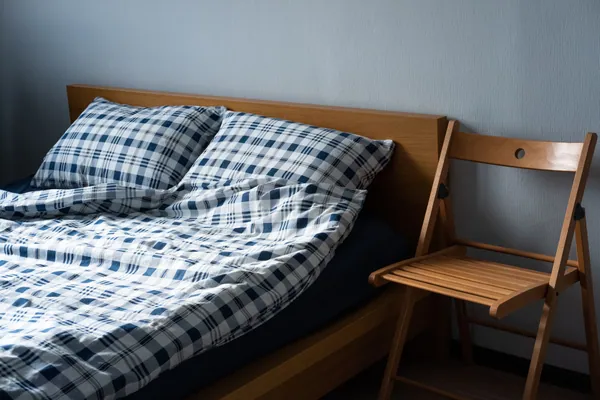
A follow-up visit two weeks on catches the nymphs hatching from eggs, breaking the cycle before they lay again.
Before anything is applied, we inspect the seams, frame joints, headboard and skirting to locate the harborage points.
Visible bugs and eggs in reachable spots are removed physically first, which lowers the population immediately and makes the treatment work on less.
Applied into the seams, joints and cracks where they actually shelter, not misted across the open mattress where they never sit during the day.
We work outward from the bed to the surrounding furniture and skirting, because by the time you notice them they have usually started to spread.
Washing and hot-drying bedding, clearing clutter and keeping the layout stable between passes is half the result.
Eggs are shielded and survive the first treatment.
The result comes from reaching the seams, joints and cracks, not from how much is sprayed.
We do not pretend one visit ends it.
The company runs a large crew, and the team arrives with the materials and a plan for the layout, so the whole affected area is handled in the visit.
If it is early and contained we say so, and if it is advanced we say that too.
Photographs from real jobs carried out by the crew.












The commitment is one you can hold us to: an honest read of the situation, and no work or cost added without telling you first.
Al Firdous stretches between Madinah Road to the east and Prince Abdulmajeed Road to the west. Our inspection begins from the district entrance near King Abdullah Medical Complex, then moves into the residential plan to reach the home to be treated.
We provide these in Al Firdous too, and more than one can share a single visit.



