We test before we wash
Testing the product on a hidden patch is a step we treat as necessary rather than optional.
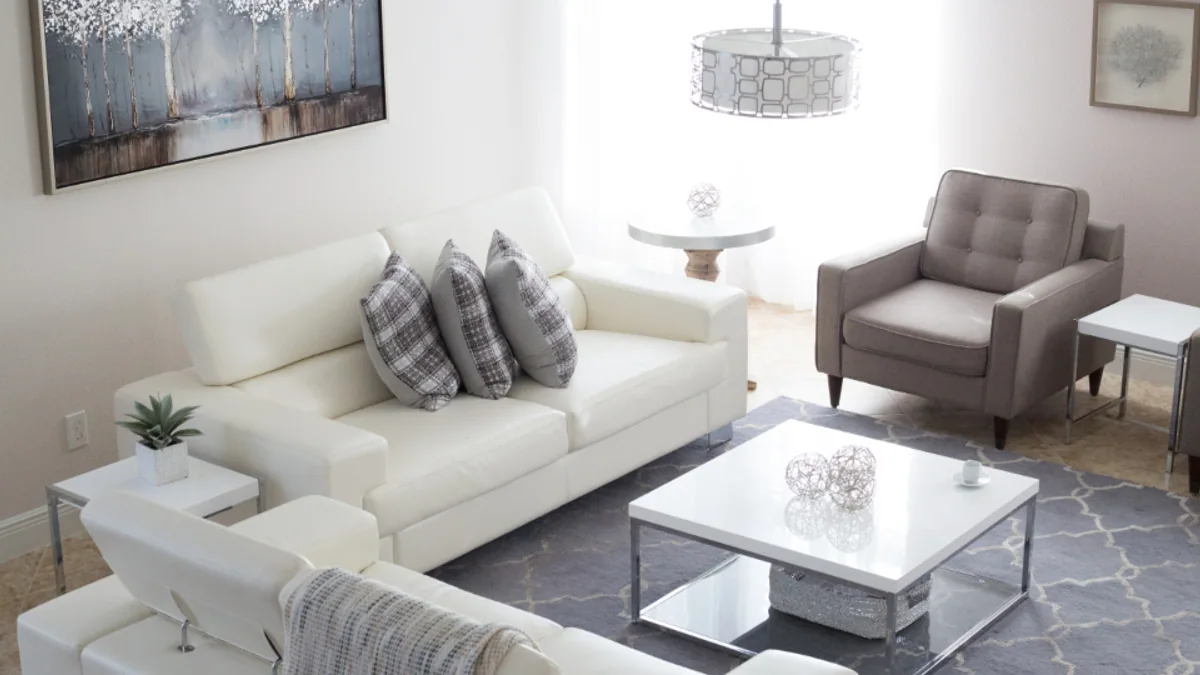
Al Muhammadiyah is an upmarket northern district between the sea and the gardens, living with salt and humidity year-round. Large villas and modern apartment buildings on Quraish Street and Prince Sultan Road hold valuable furniture exposed to salt in the air long before any visible damage appears on the fabric.
Salt deposits on every exposed surface here noticeably fast, and outdoor seating sofas carry a visible salt layer within weeks of regular use. For the method itself, see our sofa and upholstery cleaning service in detail.
Al Muhammadiyah faces the sea, and salt falls in the air the whole year. It settles on glass, metal and fabric, and works into sofas, cushions and mattresses. Humidity keeps the salt damp, so it stays active on the fibres instead of drying and falling away as it would in drier areas.
Outdoor seating and sofas on terraces and in gardens face salt directly. The spacious villas contain large outdoor sitting rooms, so outdoor furniture needs specialised cleaning different from indoor sofas. Salt-soaked cushions and covers need approaches that differ from daily-use indoor pieces.
Humidity inside the villas and towers keeps carpets, curtains and sofas slightly damp, so they hold odours and dust longer than in drier districts. Mineral scale appears fast on taps and tiling, and the dampness works into any fabric near the air conditioning outlets.
A district between King Abdulaziz Road and Madinah Road, close to the coast and Al Basatin gardens, with spacious villas and modern apartment blocks on major commercial axes and residential streets.
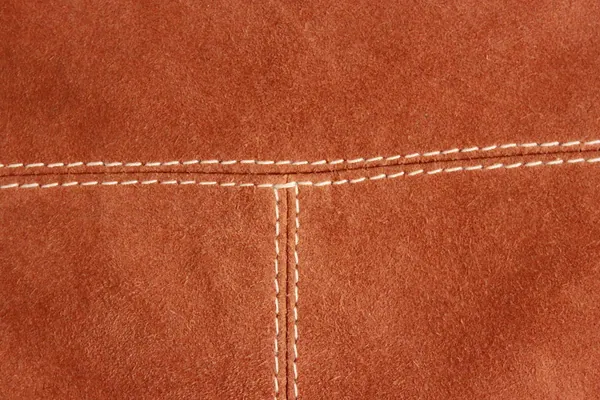
Fabric testing first is essential here because of the range of luxury, silk, wool and specialty fabrics in Al Muhammadiyah villas and apartment buildings.
Deep vacuuming removes salt and moisture trapped in the foam before washing, and this is more critical here than in other districts because of the salt accumulation.
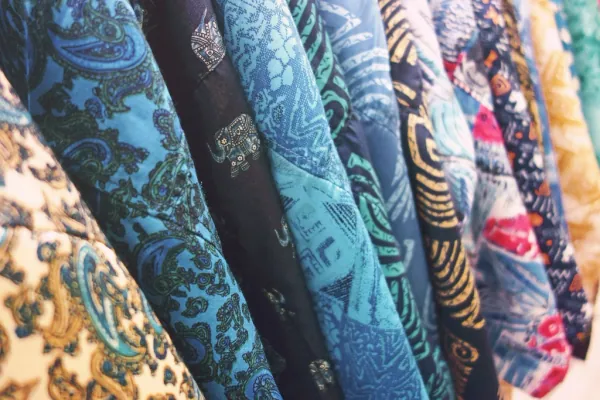
Fabric washed, back and sides requires special handling of salt-worked fibres, with repeated rinsing to lift salt deposits fully from the weave and backing.
Cushions on both faces need special care because salt accumulates in creases and folds more heavily than on flat surfaces.
Stains here are mixed: salt, salt spray and humidity effects. Treating stains by type means different products for salt residue, moisture marks and odour-bearing deposits.
Wet extraction and ventilation need close monitoring because of the high humidity, and moisture control before we leave protects the sofa from residual dampness.
Cotton, velvet, chenille and synthetics do not take the same heat or the same product.
Before any water.
An oil mark is not treated like a juice mark.
We wash with the method that suits the fabric.
The piece is left slightly damp, never wet.
We go over the pieces with you before leaving.
Testing the product on a hidden patch is a step we treat as necessary rather than optional.
The company employs more than forty cleaners, and we send a crew rather than an individual.
The washing and extraction machines are ours and travel with the crew.
If a piece needs reupholstering rather than washing, we say so.
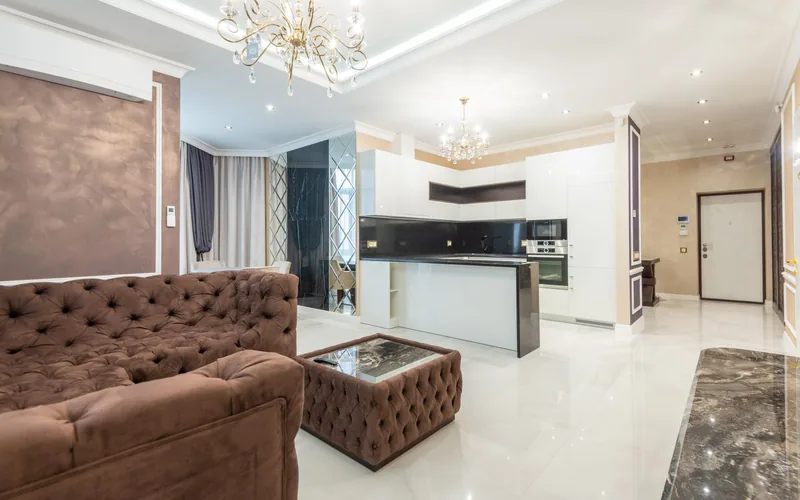
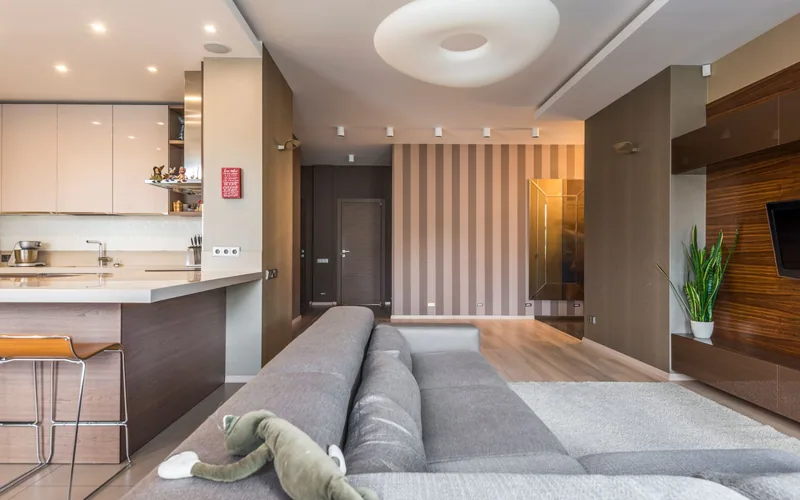
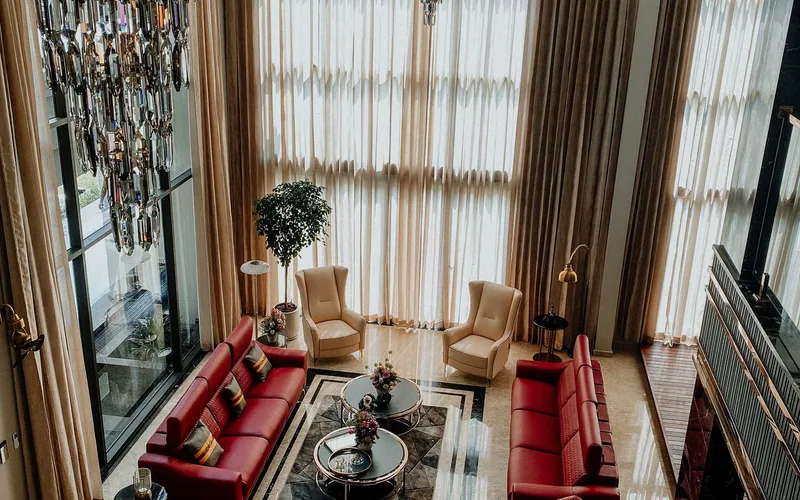
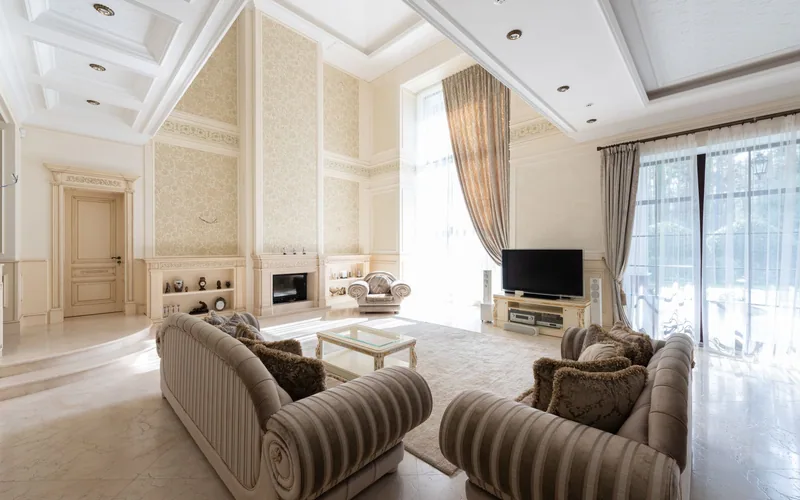
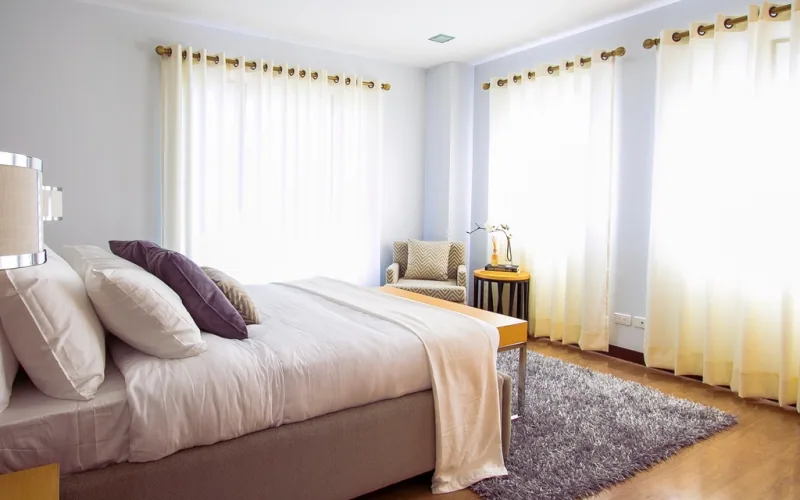
Photographs from real jobs carried out by the crew.
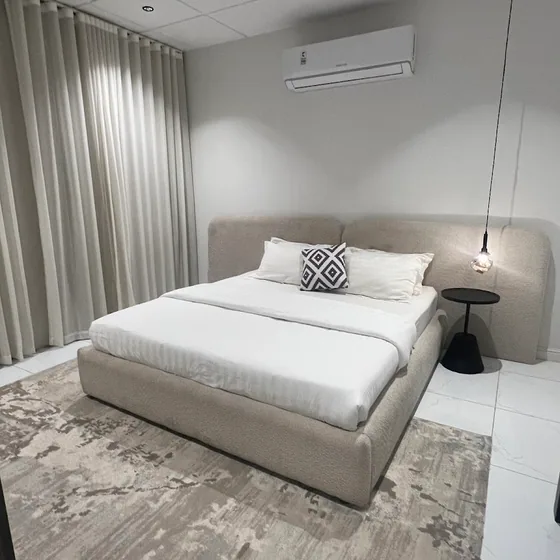
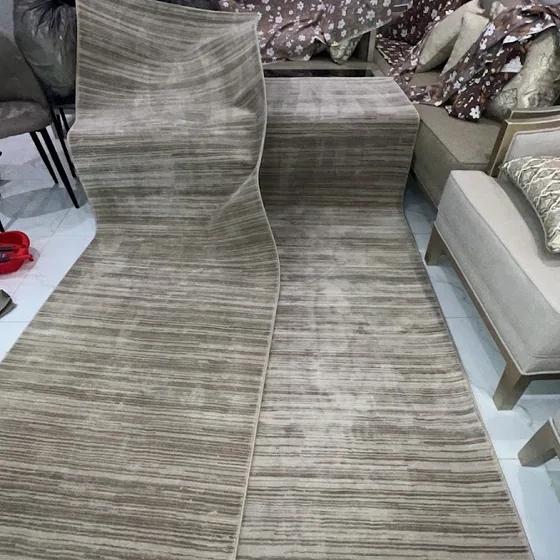
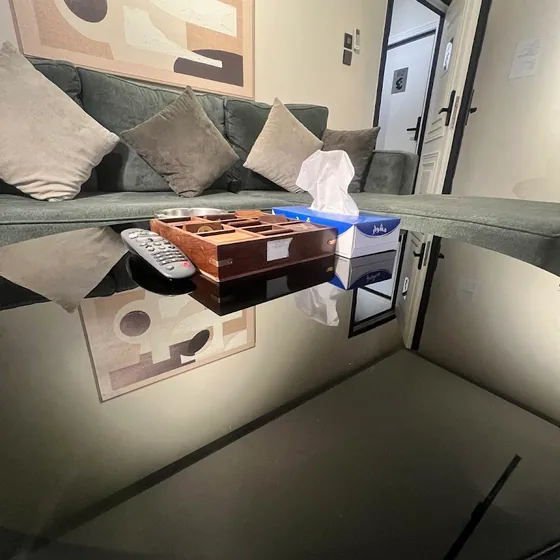
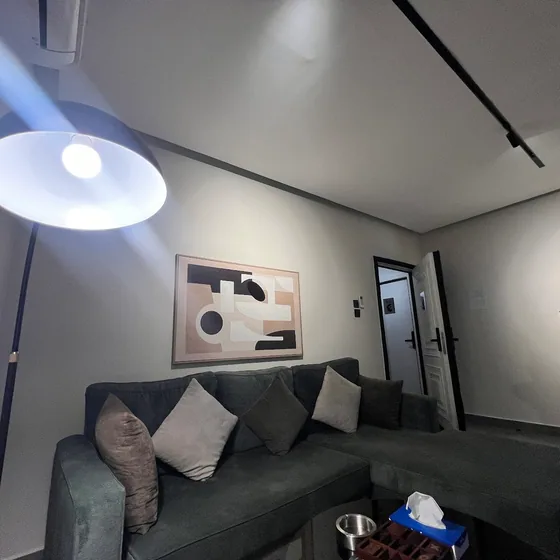
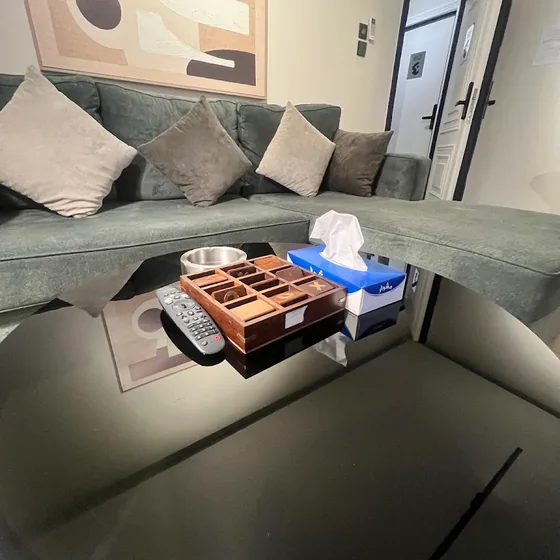
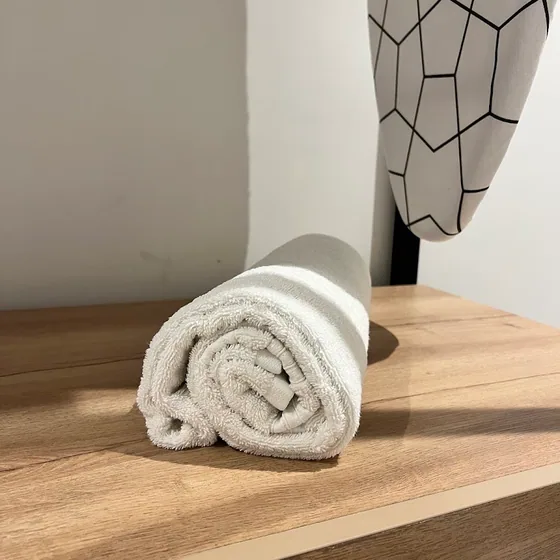
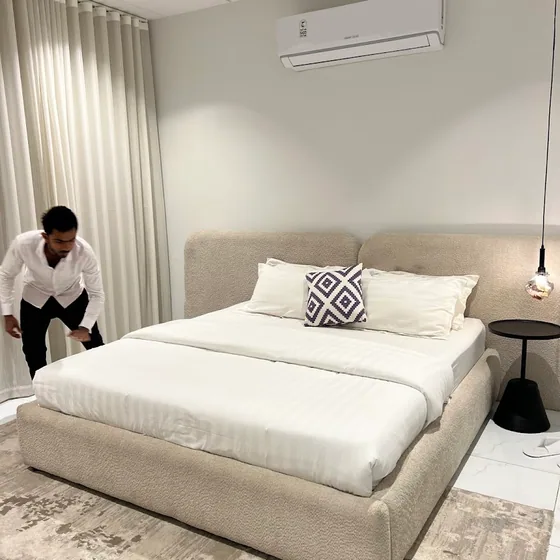
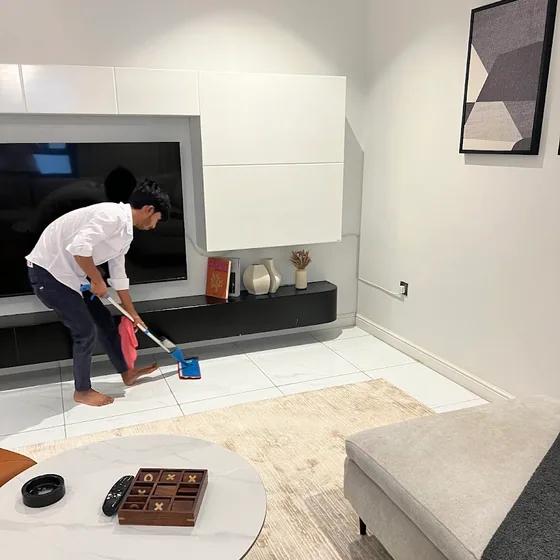
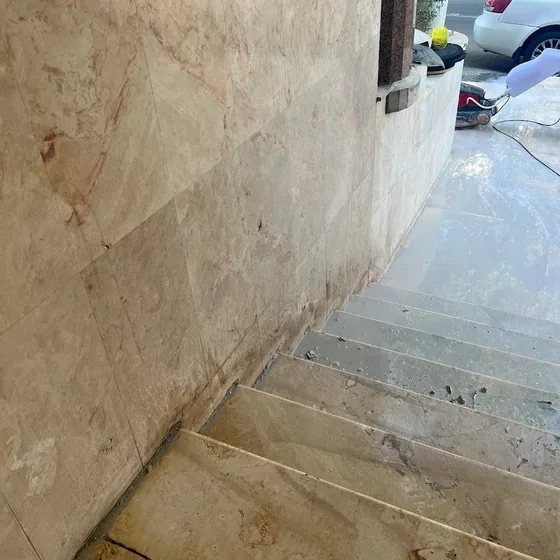
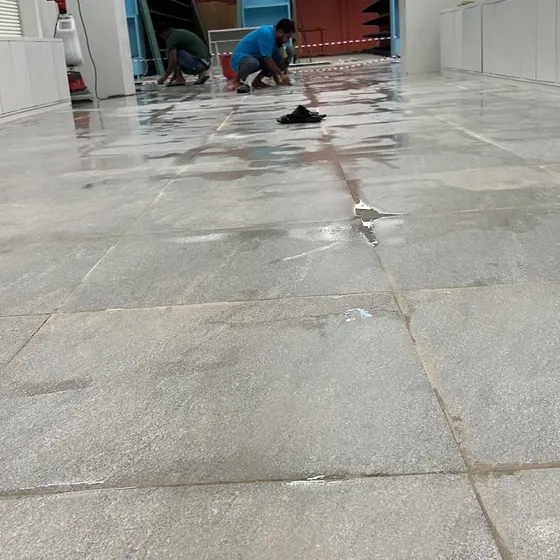
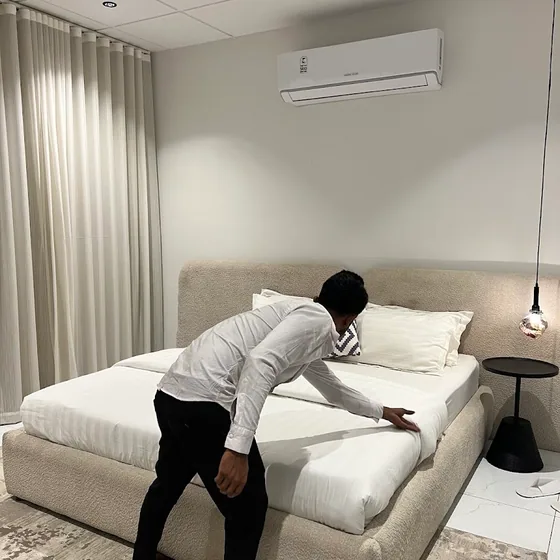
The commitment is simple enough to be keepable: we do not leave until you have seen the result and given your view of it.
West Jeddah faces the sea along the Corniche, and the flats and towers along it live with salt in the air all year. Salt settles on glass as a haze that plain water spreads rather than removes, and it works into balcony railings, outdoor fabric and the metal of window frames. Indoors, humidity keeps carpets and curtains slightly damp, so they hold odours and dust longer than in drier districts, and bathroom grout and shower glass show scale quickly. Wooden floors and doors swell a little in the wetter months.
We provide these in Al Muhammadiyah too, and more than one can share a single visit.