
Plenty of people clean before we arrive, and it is a waste of their evening. What the crew needs is not a clean house but an open one, clear surfaces, clear routes, and a decision about what is and is not to be touched.
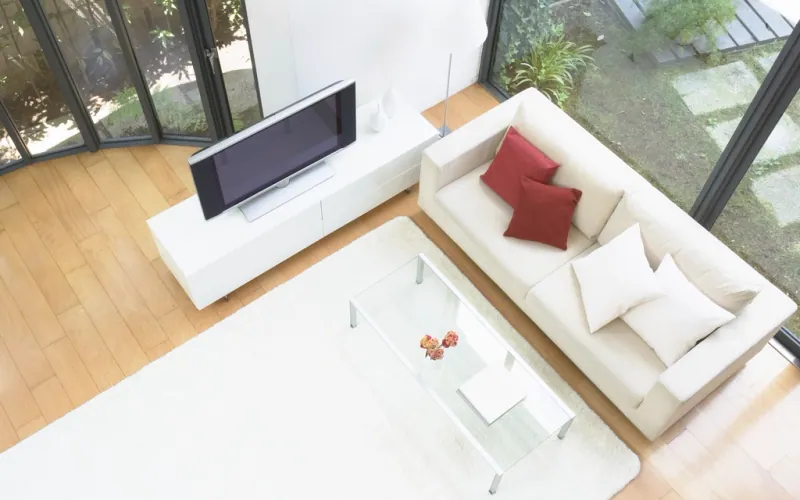
Worth five minutes of your time
- Clear the small things off surfaces: keys, medicines, paperwork. Lifting and replacing them is not cleaning, but it consumes the crew's hours. Every object left on a table is three movements rather than one: lift, wipe, put back.
- Put valuables and fragile items away: perfumes, glassware, jewellery. One drawer, closed. This is not about suspicion. It is so that nobody has to work at half speed around a shelf they are afraid of knocking.
- Open the routes: pulled-out chairs and boxes on the floor make the crew work around furniture instead of on it.
- Gather up loose laundry: clothes on the floor and damp towels do not get sorted for you. They usually end up moved onto a chair, which leaves the floor underneath exactly as it was.
- Name any room that is off limits. If there is an office with work papers in it, say so on arrival rather than assuming it is obvious.
- Open a window in each room. Ventilation is what shortens drying time, and it is the one variable you control at no cost.
What you should not do
Do not wash the dishes, mop the floor or lift the rugs first. That is our work, and leaving it as it is gives the crew an accurate picture of the property. A pre-cleaned house hides what we need to see, and it shows up again a week later.
Nor should you hide a difficult stain under a rug or a piece of furniture. What we cannot see does not get treated, and it reappears on its own once the crew has gone. The same goes for smells. If something in the house smells and you do not know why, leave the air freshener alone before the visit, because finding the source is half the fix.
Two minutes at the door
The most useful thing you can hand a crew is information, not tidiness, because missing information costs more time than mess ever does. Most of it gets settled in a short call before the appointment, which is a fixed part of how we run a home clean from start to finish. What is left is four points at the door, two minutes in all:
- Delicate surfaces: marble, natural wood, leather, wallpaper. A cleaner that does ceramic no harm will dull marble, and one sentence at the door prevents it. What acid leaves on stone is an etch rather than a stain, which we explain in keeping marble looking polished.
- Anything already broken: a weak tap, a slow drain, a dead socket, a door that will not shut. Mentioning it up front spares everyone the "who did this?" conversation at the end of the visit.
- How old the marks are: a two-day-old spill is treated differently from a year-old one, and you are the only person who knows the date.
- Your priorities: if the time or the scope is limited, say which room should be finished first instead of having the effort spread evenly across the house.
None of that is a formality. A crew that knows the worktop is marble does not reach for an acidic cleaner, and a crew that knows a mark is years old does not waste the afternoon scrubbing at it.
What genuinely delays a visit
Three things recur: no water source nearby, a balcony or roof locked with no key, and nobody present to open up and hand over. The third matters most, the crew cannot decide on your behalf whether a wardrobe gets opened.
In apartment buildings there are two more, both practical: somewhere to park near the entrance, and a lift that works. A crew arrives carrying equipment and water, and a high floor on foot changes the time estimate from the start. If entry needs clearing with the guard or the owners' association, arrange it the day before rather than on the morning itself.
Preparation depends on the visit
- A routine visit: preparation is light. Clear surfaces and open routes are enough.
- A deep clean: the decision you owe us is what gets opened. If you want the kitchen cupboards done on the inside, empty them beforehand. Emptying them during the visit eats the hours that were meant for the cleaning itself.
- After a move or building work: get the cartons and the larger debris out first, and settle explicitly whether removing waste sits inside the scope or outside it.
Where the line between the two falls, and what only ever happens on a deep visit, is set out in routine cleaning versus deep cleaning. A site where the trades have just finished is a different case again, and preparing it starts with confirming that everything dust-producing is done, as in post-construction cleaning.
Children and pets
The materials we use are safe once dry, not while drying. Keep children and animals out of the room being worked on until the floor has dried, a short window that depends on ventilation. Tell us in advance if there is a pet in the house, because it changes the order we work the rooms in.
Birds are a case of their own. Their airways are far more sensitive than a cat's or a dog's, so move the cage to a room well away from the work rather than simply shutting a door on it. Cats are troubled less by noise than by open doors, so shut one room on the cat and tell the crew which room it is.
Before the crew leaves
Walk the final round while the crew is still in the house, not the next morning. These are the places that tell you quickly how the work has gone:
- Edges, corners and the backs of doors. First to be missed, last to be looked at.
- Under anything that was moved, and whether it went back where it belongs.
- Glass and mirrors from an angle rather than head on. Smears only show when the light catches them.
- Floors once they are dry, never while wet. Water hides a real fault and invents one that is not there.
If something needs going over again, say so while the crew is still there. A few minutes now is easier on everyone than a second visit.
What we do
We agree the scope before starting rather than after: which rooms, whether it includes insides or only what is visible, and what is excluded. A written agreement before we come through the door prevents the conversation that usually starts with "I assumed that was included".
Read what our house cleaning covers first, or get in touch to book a time.